Speak Thinking

This might be the straight jacket for me if I don’t get it right. Thinking is reflected in your breath. Your breath carries your thoughts like the air around you carries sound waves from your brain through your breath and to the listener. Think of your breath and the air that carries the sound external to you as the same thing. But then how is thinking translated into sound? I think I ‘speak’. What I am saying is that even if I don’t speak my thinking can be heard in my chest cavity and then through my breathing. It is difficult to prove that it resonates in your chest cavity but it can be heard in your breathing. Extra sensory perception is not necessary to know what you are thinking. Thinking and speaking same as thinking and not speaking – I can still hear you. The process is the same whether you speak or not.
This is one way you can listen in by getting right into the chest cavity and vocal cords.

speak thinking in ear recording

Here I must point out that when the mystics of the past had emphasised the importance of breathing
they did not go into the science or the specifics of the process. They had the big picture through practice. They knew that certain things happened and they knew how it was all connected and they knew the benefits of the practice and they went about their thing. So at times when we mortals look at what they had to say, we say: crazy. Lets see what one mystics said about breathing and the breath:
From:
The Sufi Message of Hazrat Inayat Khan
Vol. 4 – HEALING AND THE MIND WORLD
PART III
MENTAL PURIFICATION

Chapter XV
The Secret of Breath

Breathing is a great secret’, the reaction is, ‘Why, I have never thought about it. What is it really?

In reality the breathing itself is voice, and the whole voice-construction depends upon breathing.

For the mystic breath is that current which carries the air out and brings the air in.

Naturally, breath being the self, it is not only the air which one exhales but it is a current which, according to mystics, runs from the physical plane into the innermost plane; a current which runs through the body, mind, and soul, touching the innermost part of life and also coming back; a continual current perpetually moving in and out.

breath runs through all three: body, mind, and soul.

http://www.sufimessage.com/mental-purification/The%20Secret%20of%20Breath.html

Ok so enough of this: mysticism still jingle jangle for some. We want to find some facts to see if thinking is connected to breathing because if thinking is really reflected in breathing then I can know what you are thinking, right? I can listen in to your breathing and it will tell me what you are thinking. I can record it, tape it and play it back. Imagine a life time of thinking saved on tape for family and friends. E-mail hacking and privacy who cares. I know what you are thinking because you are breathing and thinking is carried along with your breathing. I can see the straight jacket partially on me already. But lets stop here with the mysticism and look at facts.

image

Above are a set of PET scans on the parts of the brain that are affected by speaking and thinking.
Hence today scientist have the means to locate parts of the brain that control speaking or even thinking (and language)

There were experiments that were carried out to confirm the areas that controlled speaking.
The area that controls speaking was discovered by Paul Broca a French neurologist, who had a patient who could not speak. After the patient died an autopsy showed “that an area of the frontal lobe, just ahead of the motor cortex controlling the mouth, had been seriously damaged. He correctly hypothesized that this area was responsible for speech production.” This part of the brain was then called the
Broca’s area” This part controlled the muscles of the mouth.

(http://webspace.ship.edu/c/speechbrain.html)

image

Now thinking:
When we want to speak, we formulate what we are going to say in Wernicke’s area, which then transmits our plan of speech to Broca’s area, where the plan of speech is carried out. (http://en.wiki.org/wiki/Receptive_aphasia)

The diagram above shows these areas clearly.

So in the brain there is that area that formulates language before you speak. It is formulated in the Wernicke’s area in the brain. The signals are then sent to the Broca’s area in the brain to get ready to create sound and hence speech.
So now you have to see how the larynx and the muscles in the mouth are controlled to create speech. Breathing sits on top of this. This is important that you keep in mind that breathing runs simultaneously with this process of first thinking then speaking. Just to remind you that what I am trying to do here is to show you that thinking is also ‘heard’ in breathing. Extra sensory perception is not the only way that you can read a persons mind. You can also do this by listening to his breathing.

So how is sound controlled by the larynx and what is the function of the tongue in all of this.

The larynx which houses the vocal cords only controls the pitch of sound. To keep it all concise from here. The pitch is like the from high pitch Michael Jackson to low pitch Louis Armstrong. That is all the vocal cords can do.

Your language is created by your tongue, lips and palate on the back of this. Speaking itself is made by the muscles of the mouth: tongue, back of your palate and lips.

“Some consonants are called labials (Latin labia, lip) because they are formed by the lips; it is impossible to say b, p, f, m, or v with your mouth alone. Others (d, t, l, n, r, s, z, ch, j) are lingua, requiring the use of the tongue (Latin lingua, tongue). G, q, and k are gutterals, made with the back of the palate (Latin gutter, throat).”

http://www.daviddarling.info/encyclopedia/L/larynx.html

Your chest cavity, your breathing tubes, your diaphragm all help to make the sound louder: “amplifies the sound just as the body of a violin does.”
It is more difficult to prove to a reader that the chest cavity is another source to listen to thinking. The chest cavity amplifies the sound and with careful listening can ‘hear’ thinking. But as the sound is ‘carried out’ by breathing it is proof that it happens in the chest cavity too as muscles in the larynx and cavity resonate to the stimulus from the brain to create sound. This is probably a better source to listen into and with a better quality sound.

It takes observation on your part to know that thinking only (with no speaking) is carried along from your brain right up to your mouth whether you speak or not. Try this: your are at your ATM. You want some money. Just think it out: pin number: 1,2,3,4: now watch your tongue movements while you key these numbers in your mind: can you feel your tongue move like you are speaking? Yes. While you are writing an essay, silently, your tongue moves quietly with every word. The only anatomical part of speech that is silent are your lips. But the lips create the clear word. Without your lips words are still clear enough to understand what is being thought. You can try this by opening your mouth (or keeping it shut), keeping your lips still and talk what you are thinking: you can still be understood. What you hear is what can be heard with your breath. The tongue and your back palate and other muscles in the mouth that is involved in speech move with thinking and the movement of the air of breathing over the tongue and the shape of the space it creates inside your mouth creates words that can still be understood. You can also try this: pull your thermals over your face and place both palms on your face to keep the thermals in place and listen to your breathing while you think. The modulation of sound/language heard through the process of breathing is your thinking. And another experiment: put a finger spatula in your mouth and keep your tongue down and from moving: you can see that the words are less clear. The process of thinking and speaking is separated only by the use of the lips.
So you know that if you are reading a letter silently, or writing an e-mail (watch your tongue while you do this) somebody might be listening.

The latest research on this (31 january 2012) to listen to brain recordings see link below:

http://www.nature.com/news/voicegrams-transform-brain-activity-into-words-1.9945

It is only language that is carried in the breath. Image making and pictorial thinking that are not translated into words do still remains safe in the brain or maybe not…….

“This is so cool it’s almost creepy: Researchers at the University of California, Berkeley, reconstructed movies that test subjects had watched, using functional MRI scans to convert brain activity into fuzzy but eerily accurate moving images.” The future is here today. (http://www.radiologydaily.com/daily/neuroradiology/brain-mri-can-picture-what-youre-thinking/)

UPDATE: 29 May 2012
—————————-
I cannot be far wrong if the New Scientist magazine things that this can be done. But it is done in not exactly the same way as i had suggested. Observation can be a really powertool to bring out the Truth in the inner self. That is why thinkers like J. Krishnamurti had seen the power of critical self-awareness as the tool to decipher the real from the unreal. In the link below you can see that in 2008 thinking can be used to make a voiceless phone call. But in this case you notice that the controller of thought can edit his stream of thoughts to allow the sentences that he wants to ‘pass’ through to his mobile phone. That is because in this case the process is interceppted at the junction where editing is possible and then he silently ‘speaks’ what he wants to ‘pass’ to his mobile phone. But remember all thinking is carried out by the breath – all: no editing is possible when it has crossed that line and IF YOU MONITOR YOUR BREATHING YOU WILL KNOW WHAT YOU ARE THINKING – or the person standing next to you: to know what he is thinking by listening to his breathing.

http://www.newscientist.com/article/dn13449

So with the above you need to get really close to your vocal cords to get it to work.

There are applications for 1-phone mobile to record what people are saying through speech as in ‘Isaidwhat’ as in the link below. Have fun recording the speech of people in buses etc and you can then play it back to them to confuse them – so funny?!! ha ha. nice one.
http://www.tapparatus.com/isaidwhat/

But remember if you want to know what your friend is thinking you got to get closer with a more sensitive application and if with a portable device like a mobile phone then the better as then you can get anybody as target like ‘on the buses’. So if you see this guy or gal sitting behind you in the bus getting real close to you with his mobile phone and aiming it at your neck area then he/she might be using an application that is supersensitive like an Electronic voice phenomena (EVP) application. EVP’s are supersensitive recording gadgets or software applications that are use to detect ‘ghost sounds’. You know how it works from the above and if he can listen to the modulation of your breathing and the gadget or software has been programmed to understand the ‘formants’ (http://en.wikipedia.org/wiki/Formant) that is ‘in speech science and phonetics, formant is also used to mean an acoustic resonance of the human vocal tract’ (wiki). If the gadget can interpret the ‘formants’, that resonates inside the vocal cords and the chest cavity of the individual, when the individual is not speaking: then he can hear you thinking. EVP software: You can try this one all ready for you as an application.

http://itunes.apple.com/gb/app/paranormal-recorder/id330027247?mt=8

or if you have a laptop, easy enough to get it on a buses for some recording, but with double super sensitivity microphone try this one:
http://www.hitsquad.com/smm/programs/MatrixVir/

And of course if you also like to listen to his heartbeat and know if his blood pressure is up and if he is going to have a heart attack etc:

Update 31st May 2012
All the above is tracking activity on the move but can also be used in an enclosed environment. But what is important is that all the above can be made more sensitive or supper sensitive to get to the level where you can start to record voice that is first formed inside your body cavity/vocal cords (Formants) before your lips, tongue and mouth muscles can form the words that we can understand as speech. So you need a recorder that can understand ‘formants’ – the first stage of voice production that is created in the vocal cords and the chest cavity. You get a gadget that can interpret this and then convert it to speech that you can understand. It is like having the gadget to do the work of the lips, tongue and mouth muscles.
Remember that we are now looking into if it is possible to record what people are thinking in a self contained environment. Recording ‘formants’ that reflect thinking. With speech recognition software the process of recording your voice becomes a lot easier with background noise not that much of a problem anymore. This is because the software is first trained to recocognise the kind of voice/sound that the perpetrator wants to record. So there can be jingle jangle happening about the target but they will only record the sound of the person they want to monitor. This can be easily done in a controlled environment like a recording studio and the process evolves to the environment outside: a bus, a taxi, the underground, a plane, a cinema, a conferance room, at home:daughter spying on father, neighbour on neighbour, etc. You get the idea. All easily done with todays technology.

And if you look at this link below you can see how the laser microphone you can use can get right into your chest cavity and vocal chords to listen to what you are thinking. This is easily done especially in self-contained open spaces where there is not much movement in the individual. Like in an aeroplane, in a park reading your newspaper, like when you are stationary for a while, like in a bus etc. But a plane is best to get all the business secrets of an individual on his way to a business meeting. Can be done, i think.

image

So i am thinking this with you. I don’t want you to think that i am telling you how this is done. But i am saying that it is/might be possible now. I say might only because one can be deceived to belief that it might be possible and it really is fraud. Remember that this is recording of thinking not using a collar as above but direct recording of ‘formants’ before it is translated to speech and hence recording of thinking.

I did all the searches on the net and then some thinking and lots of realtime reflection i noticed that when i typed the keyword what came up was mostly the music industry, films, singing, voice control etc.: the music recording studio. So here was the answer i think to where all the equipment for supersensitive voice recordings came from. Voice recording and playbacks and voice throwing, long distance recording with telescopic recorders and throw back of voice would come from the film industry. I think todays best recording equipments for whispers and especially ‘formants’ would come out of the recording studio. The vacoder could be used to record low level noise or other top end recorders: http://www.onlineinstrumentation.co.uk/controllers-and-recorders/videographic-recorder-sm3000.html. But i am sure there are others out there that are manufactured in labs and are not out for sale. There are those to capture audible speech, or the whisper or the ‘formant’, that sound that is related to thinking before the process of editing that is then allowed to be spoken.

Below are examples of spectrograms of speech, whisper and the ‘formant’. You could see ‘formant’ noise as raw data, unprocessed yet it can be a very powerful subliminal signal. This article does not end with the present possibility of recording your thinking. Through the recording of the ‘formant’ it ia now capable of
telling you what to think.

“Noise with these sort of characteristics is called ‘formant noise’ and it can sound uncannily like real speech. It can be good enough to trip the brain into ‘speech mode’. Though the apparent formants may make no sense (as they are noise, not words), our brains will work hard to turn the result into recognisable words. That’s because they use a ‘top-down’ process to processing speech, trying to fit likely words to the apparent formants present. It explains why, with formant noise, you never ‘hear’ partial words. The words come from your brain, not the sound, and are made to fit the noise. In the same way, whole phrases can emerge. You may need to listen to formant noise several times to fix the phrase as your brain tries various likely alternatives. If someone tells you beforehand what the ‘words’ are meant to be, you will often hear it straight away.” (http://www.assap.ac.uk/newsite/articles/Formant%20noise.html)

So if you hear a sound come past you: ‘formants’ are hardly words but they contain meaning. you give it some time and the mind makes a sentence out of that sound. At times it does not even have to be a sound but just a muffle of a something. But the brain picks it up through your sensors and it is programmed to make something out of it and it comes up with a sentence or an idea perhaps. How do you know that it was not sent to you. And if it was sent to you via a ‘formant’, now you have lost all control of your free will: you work on that idea as if it was yours and now you are doing the work of others.

image

image

++++++++++++++++++++++++++++++++++++++++++++

and also http://www.youtube.com/watch?feature=player_embedded&v=qUioNg_Yw-A on how to control a wheelchair with thought. Notice here that you have to be a ventriloquist for this system to work. The process of thinking and silently speaking -speak thinking- is a simultaneous natural process – they function together and you cannot stop it.

++++++++++++++++++++++++++++++++++++++++++++++++++++++++++++++++++++++++++

ps: About listening devices in use today to do the job? Firstly i must point out to you that if there is any such devices that is in existence you are not going to know about it. Also the scientist in ‘Palermo’ is going to know about this new technology before you do.
But if you troll the net you might see that it is not impossible.
i will leave you with the best of wiki: http://www.en.wiki.org/wiki/Covert_listening_device on listening devices and how they are used.
And you might be interested in this one if you live in a newly built apartment: The United States Embassy in Moscow was bugged during its construction in the 1970s by Soviet agents posing as laborers. When discovered in the early 1980s, it was found that even the concrete columns were so riddled with bugs that the building eventually had to be torn down and replaced with a new one, built with U.S. materials and labor.[12] For a time, until the new building was completed, embassy workers had to communicate in conference rooms in writing, using children’s “Mystic Writing Tablets”.

Also look at ‘Array Microphones’ if you are interested. These are 360 degree directional microphones that follow you around your home for covert listening – http://www.en.wiki.org/wiki/Microphone_array

******************************************
pps:
image

some new research on brain activity:
http://www.dailymail.co.uk/sciencetech/article-2137178/Teenagers-binge-drinking-drug-abuse-linked-way-brain-wired.html

Related Images:

Very Surely Clearly

I went for a talk to the Rajneesh’s ashram in Pune, India around 1980. It was a long time ago. I did not understand anything he said and sat there crossed legged for about 2 hours hoping that I could get up and go. But they had told us at the start of the talk that we could not leave while the talk was on. All his devotees wore yellow robes. I remember this lady from Africa there, probably African American, but I don’t remember any of the Indian faces or the rest of the European faces there. I remember Rajneesh came in his Rolls Royce. It was white in colour. But he had a few of them in his garage I was told – all gifts, mostly from rich Americans. Also this I remember: All devotees and me had to go through a metal detector, before taking our seats on the floor. The kind of detector that you find at airports. The reason for this was that someone had once thrown a knife at him. Vaguely I think his talk was on love: but not sure of the rest – most of it was like water off a ducks back, to me, then. But I remember his voice: softly softly, spoken clearly – like he saw everything he said. He was surely sure of what he was talking about. Once Jiddu Krishnamurti was asked: who interprets best what he says and his reply was Rajneesh. But I think he said it in jest. From what you are about to read: you can see how he says it like he sees it: very surely clearly. About a couple of years ago I did go back to the Ashram and had a meal at the German bakery outside the Ashram. You might not find the bakery there now as it got bombed. The Ashram had all changed and people are business like and Ashram Plc. Not like before: if you came you got to get in and listen and also to some of his jokes. When i was there about 30 years ago I remember the 2 jokes he said like it was said yesterday. Remember he spoke softly softly (and this is a true story):

Joke no: 1 – Jesus arrived at a hotel reception threw some nails onto the reception desk and said , ‘put me up’.

Joke no: 2 – 2 Italian men sitting in front of an Italian cafe: one was a young male and the other an elderly man. It was a bright sunny day and lots of people were out and about walking past them.
Elderly man asked the young man: Do you like fat women?
and the younger man said: No.
Elderly man: Do you like women with big breasts?
Young man said: No.
Elderly man: Then why you fucking my wife?

I don’t usually swear but i am saying it as it was said. I did not make up the swear words.

In this article Rajneesh talks of breathing and concentrating on breathing and if you concentrate on breathing then your thinking stops: both he says cannot exists together at the same time. Then you progress to concentrating on thinking itself – and thinking stops. Both being aware of thinking and thinking itself cannot exists together at the same time. Then you watch your feeling and feeling……

He died in 1990.

Art can be made from different spaces in your mind.

Osho – Just go on watching your Breathing
Osho – People go on doing things almost in a sleep. Just become a little more alert. Do whatsoever you are doing, but bring the quality of consciousness to your actions — there is no other method. And you can bring that quality to small things and that is helpful. Sitting, just watch your breathing. The breath goes in, watch; the breath goes out, watch. Just go on watching your breathing. And it is of great help because if you watch your breathing, thinking stops.

This is something to be understood. Either you can think or you can watch your breathing. You can’t do both together. Breathing and thinking are such processes that only one can exist in you — in awareness. In unawareness, both can continue: you can go on breathing and you can go on thinking.

But if you become aware, either you can think or you can breathe; and when you breathe with awareness, thinking disappears. Your whole consciousness becomes focused on breathing. And breathing is such a simple process: you need not do it, it is already happening. You can just bring your consciousness to it.

Buddha became enlightened through this simple method. He calls it vipassana, insight. Breathing brings great insight and when you are aware of breathing, the whole thought process simply comes to a stop — and great stillness arises. After watching your breathing, it will be easy to watch your thinking directly, because breathing is a little gross.

Thinking is more subtle. Thoughts have no weight, they are weightless; they can’t be measured, they are immeasurable. That’s why the materialists cannot accept them. Matter means measure — that which can be measured is matter. So thought is not matter because it cannot be measured. It is, and yet it cannot be measured; hence it is an epiphenomenon.

The materialist says, “It is only a by-product, a side effect, a shadow phenomenon” — just as you walk in the sun, a shadow follows you. But the shadow is nothing. You walk in life and thinking arises, but it is only a shadow. If you watch this shadow, this epiphenomenon, these thoughts and the processes of thought… it is going to be a more subtle phenomenon because it is not as gross as breathing.

But first, learn the process of awareness through breathing and then move to thinking. And you will be surprised: the more you watch your thinking… again, either you can watch or you can think. Both cannot be done simultaneously. If you watch, thinking disappears.

If thinking appears, watching disappears. When you have become alert enough to watch your thoughts and let them disappear through watching, then move to feeling — which is even more subtle. And these are the three steps of vipassana. First breathing, second thinking, third feeling. And when all these three have disappeared, what is left is your being. To know it is to know all. To conquer it is to conquer all.
Source: from Osho Book “Dhammapada Vol 6”

And if you want to know about how thinking is heard in your breathing please read the next article on “speak thinking”.

Related Images:

Now Where That Come From?

if you not watching your mind,
if you don’t know,
where it coming from,
then you nothing,
now where that come from,
I hear this voice ask me,
whenever i am bored.

I was reading the Metro, a local free paper that I picked up from the White City tube station and came across this about JK Rowling. It is about the ideas she got about her Harry Potter books: The ideas for the stories came to her in 1990 as she sat on a delayed Manchester to London train. The article ended with: She once said, “I really don’t know where the idea came from.”

I gather these days nobody reads past the first 10 paragraphs so it makes no sense to write a whole lot and perhaps better to just summarise. Maybe even a diagram as an introduction, the whole thing in a flash just right there at the beginning so you don’t need to read the whole article. Lets face it what is it that any of us has to offer. Our own experiences incomplete as to what the Truth really is. When the Truth stands before you, one day – you will find that you got it all wrong. The universe only allows you a peak from time to time – but when they come true to your experiences – you are hooked and there is no turning back from them. It is as if the direction is set, you cross the earthly line, and you walk the path and from time to time it gives a little bit more – you put a picture together but it will never be complete. It teases you just a bit at a time. If It gives you all of it at once then you might not appreciate it and then it is just – like water off a ducks back.
Firstly there is new and there is new: new to you and perhaps not to others, then it is not truly new; and then there is that which is universally new – new to all when it arrives.

whenever i am bored.image

My studio is only a stone’s throw away from where I live. It is not an effort to get to it. The effort is in the mind. I live in a deterministic universe. That is the force first and last. It has its own laws. It is vast and engulfing. Its burden on me is heavy with its rules as it does not allow me space to move. It is made to stay in equilibrium and you with it. You are given free will to discover and at the same time your mind exists with limitations – advertising, induced thinking etc.

“At Absolute zero (-273.15 degrees Celsius) the deterministic universe still has zero-point energy, the energy of its ground state. The kinetic energy of the ground state cannot be removed. (wiki)”. It always is just that all the time. But when you remove all else at absolute zero, zero-point energy is still there.
The energy at that temperature is unchanging. Constant. Stable. It is not going anywhere even if you want it too. Your free-will cannot make it move. Us and all the illusions we created together with the Morphogenetic field and everything else you can think off sits on top of this. When all the illusions disappear, and the big mechanical cleaners come along and spray the universe with all the water it contains: whats left is Zero-point energy – constant. Stable. Everything else is an illusion: nothing is real.

And you sit in your studio and you are looking for what’s new. Your mind is full of limitations and the scientist tells us that there is only one thing that is constant: the deterministic universe with its zero-point energy.

Short walk to studio. Beautiful building. Ana banana. Lights on. Coffee. Sunny day. Seated. Fresh eye on yesterdays work on the wall. No thinking. Silence. Epiphany comes from nothingness. It comes from no knowledge , through spontaneity or chance or through a mistake made. It comes along as nothing that is now in existence. The studio:

image

now where that come from,
I hear this voice ask me,
whenever i am bored.

Related Images:

Natural Perpetrators

Perception 2: Natural Perpetrators

I created a scenario for you in perception 1. I tried to show with examples and links how the new technologies could manipulate the individual to ‘become’ something he is not. I think I put a good case across with examples and links to suggest how technologies today could be used to influence us through our natural sensors – sight, sound, smell, and touch – to influence us with all the emotions that can be conjured up with these natural sensors. A convincing case can be made up to seem that it is real and it becomes real. Hearing is a particularly interesting sensor as there is the audible and the inaudible aspect of it ( further perpetuating the idea.) Subliminal messages on ‘silent mode’ can be transmitted to where there might be ‘no’ audible sound to the individual but it is no different to that of what you can hear. The subliminal message still gets across. They bounce off what’s around you and arrive in a muffle. You see I am still trying to convince you and the more I do it the more it becomes believable, like writing fiction. Today science and technology has got closer to manipulating the ‘self’. To the artist who wants to cross-the-line for the new, to manifest that which is not there, he has yet, as seen above, another obstacle to overcome. But then you want to ask: has the individual ever been free to create the ‘new’ or is he really ever was always shackled to the structure of the process: from the big bang of zero consciousness to the created morphogenetic field (Rupert Sheldrake) that evolved as a result of us being creative. We created our past and we are at present living off it. We are not living in an absolute world. Not that there is not the Truth of things: the laws of nature is the bottom line: you look towards it for inspiration. This is even more relevant today: we created a Disney land of ideas as to how best to live our lives, feeding off a collection of ideas, piling one of top of each other, well off the path of the Truth of the natural laws of the universe and we have reached the tipping point for those set of ideas and it is crumbling off the top. So the artist and his ideas: no different. Might it just be that the new is just not possible: it is all only a permutation of the ‘Disneyland of ideas’ that we created for ourselves and we are living off it and in that illusion, while feeding off the morphic field created from the past. As has been said and with good reason: one has to see, ‘what is’ (J. Krishnamurti) and live with those limitations for nothing new is ahead of us but just a crumbling of old ideas and making of another off the old past and the cycle is repeated. So how does one come off this circle, where the ‘beginning is the ending’ and for ever doomed to repetition of social cycles spanning time that is too long for one to remember when the last one ended. Memory in mind might be erased on passing, but the past is something that the living continues to carry around with them.

There is 2 sides to all of us: the visible and the invisible. I hope with today’s advancements in quantum mechanics we can say this without having to make excuses. Programs on TV today put across the facts quiet simply for anyone to see science today as it is. Each atom I gather on each individual can radiate out about a kilometre around that individual. So unless you are alone in the desert, that energy is going to interact with the energy of the 100’s that are walking past you and with a possible discovery of the Higgs Boson, we are all living in a sieve of treacle as we interact with each other. (something to think about is that isolation, like the recognised prophets have done in the past, does allow for a clear uninterrupted field of ‘vision’ from individuals) There are no individuals in the cities: there are groups of people creating their collective morphogenetic fields in the ether and collectively living off it and these fields probably cross oceans and people are affected by what goes on in places they do not even know about. The properties of the field is organic: not the same from one moment to another as new ideas are added to it. A good example for this is today’s financial crises: I gather a new idea by the investment bankers of creating a certain kind of derivative that was not easy to quantify and money was borrowed on these derivatives – great idea at the time, create something that looks like something which turned out to be nothing and lets borrow money on it pretending that it is something. Sounds like a great painting idea – after it is conceived, make it and set a value for it after the idea has been manifested. It will be valuable if the idea is ‘new’ but what if the ‘new’ comes off the old. The human being as an entity is not going anywhere but into itself. It is held in place by the limitations of its sensors that make up its visible world and also by its invisible world by being held in its place by the energies that surround it. The individual can only make itself of itself and of the collective entity (the morphic field). It makes an illusionary world that it then inhabits thinking that it is real. It only takes a derivative trader with a good ‘new’ idea to show you how vulnerable the system can be and you want to consider that the good ‘new’ idea of the last century, carefully building on itself, has reached its tipping point and it might be just too close to us for us to see its end. It has been said that they come in stages of dips and plateaus. A dip is corrected temporarily to a plateau and then the next dip comes along until there are no more resources to contain it any more. You must think of it as a whole entity of a big idea this thing called ‘society’. Every big idea will have its tipping point as you can push it only so far before it runs dry. Art and creativity I think is not sitting tall outside of all of this but is actually the driving force behind this illusion, creating the unreal and perpetuating the illusion. It is the engine of the Morphogenetic field. A natural perpetrator of the illusion.

New ideas do turn up at times. Something might look like a new idea and it might look like it is coming from outside the energy field that keeps the past, but then is it possible that field itself generates these so called new ideas from itself. One must remember that the morphogenetic field
is an energy field with an array of patterns and forms: like that in a painting. Shapes and things and patterns and colour. In these energy fields the information is stored in patterns of energy, forms and shapes.

According to Swedenborg, “the uninterrupted creativity of the universe comes from, in which there an endless multiplicity of forms of which none resembles the other”. So how then does the new idea arise.

Rupert Sheldrake: “New fields (morphic fields) start off as insights, intuitive leaps, guesses, hypotheses or conjectures. They are like mental mutations. New associations or patterns of connections come into being suddenly by a kind of Gestalt-switch”.

I can understand that a set of patterns put together can form new associations and patterns but if you put a bunch of tomatoes together and jumble it up and look at it again you are not going to get asparagus. You cannot get away from that which you have created in the first place. The truly new has to come from outside of the limits of the ‘what is’ to be truly new. If we live of what we create and cannot come off it then there is no going anywhere but only to where disorder prevails. Even the ever expanding universe cannot escape this as nothing stands still. One second is different from the next. And society as an idea of the human mind that came off the past and from the generating of ideas from within itself for ever evolving from the desires of the mind, getting more complex and expanding might find that what it sits on was not made to hold up what it has become.
Hopefully in the circle, it is not getting close to the beginning of where the end is.

So just as Society is an idea of the mind as all Art is in its forms is a thing of its collective past or a mutation of it. (Ursula Groll in “Swedenborg and New Paradigm Science”) describes Swedenborg in his visionary work how the spirit works on the body and how all changes in the body are caused by perception. For people are, above all, “spiritual figures,” to whom the “inner world” lends form.
Humanity is linked through the inner world to the whole cosmos, in morphic resonance to use Sheldrake’s words. Each human being is connected with every other human being and thereby subject, consciously or unconsciously, to all good and evil influences.

Swedenborg: nothing in the universe can “ arise and exist without ordering itself within a collective.”

Sheldrake’s hypothesis also suggests “that the entire history of the human spirit that derived from a unified immaterial common spirit, which then took form in the development of the different arts, cultures, religions and sciences.”

The Arts might not show us what the Truth is if it only deals with its own content, but the process does have one thing going for it: it does naturally take you into the inner world and gives you inner sight for understanding your invisible world. IF you would allow me to say this: too many material beings are living with only a part of themselves in existence: they see only what their sensors tell them. You meet the Truth with both your visible and the invisible worlds. Art can make you do this because the process allows for it. But can it manifest from outside its past and create the truly ‘new’ is doubtful. Perhaps it can only go round in circles, feeding off what it has already created, until we find a way out of our limitations.

AS with the new technologies that can alter our perception, so can the natural perpetrators of the invisible processes of the ‘self’. Boom and bust is not only a trait for the financial world but possibly also tied up with the social cycles of the past and with the limitations of the mind and its processes.

Until the day, the mind, can find a way to work outside its limitations and free itself from its past then perhaps creativity can find a way to create the truly new.
I end this wth a quote from J.Krishnamurti:

“The known can never know the Unknown. Sirs, this is not just a statement; but if you listen to it, if you listen to the real meaning of it, you will know the truth of it. But the man of vanity, the man of knowledge, the scholar, the man who is pursuing a result, can never know the Unknown; therefore he cannot be a creative being. And at the present time it is the creative being—the man who is creative—that is essential in our daily life, not a man who has a new technique, a new panacea. And there can be no creativeness if there is already a residue of knowledge. The mind must be empty to be creative. It means the mind must be totally and completely humble. Then only is there a possibility of that creativity to come into being.” – J. Krishnamurti

Related Images:

‘Art, Creativity and All That’ by O.R. Rao

Art, Creativity and All That

‘Painting harnesses eternity’
—Van Gogh

‘All the achievements of the great painters, poets and composers are the activity of thought: the composer, inwardly hearing the marvellous sound, commits it onto paper. That is the movement of thought… Thought is responsible for all the cruelty, the wars, the war machines and the brutality of war, the killing, the terror, the throwing of bombs, the taking of hostages in the name of a cause, or without a cause. Thought is also responsible for the cathedrals, the beauty of their structure, the lovely poems…’

—J. Krishnamurti

Does the statement of Krishnamurti completely demolish the statement of Van Gogh? At first sight, it would indeed appear so. If the creations of art have the same origin in thought as the most destructive actions of war and terrorism, then indeed art stands condemned. In that case do we stop looking at and appreciating great paintings and other works of art, stop reading poetry and other great literature? If indeed we do that we may have to take out a funeral procession for the arts, as the musicians of Delhi are said to have done when Aurangazeb issued a ban on music in that city. Hence we need to examine what exactly is going on here.

By ‘thought’ we ordinarily mean ideation, abstract thinking, as opposed to emotion or volition. Thinking is supposed to be logical, abstract, representational, explanatory, ‘objective’, free from our subjective wishes, desires, fears etc. At least, thinking which claims to be truthful has to have these qualities. The sense in which Krishnamurti uses the word ‘thought’ is however, as we know, entirely different. By that word he means the entire content of consciousness, which is, all our memories, our sense of identity derived from these memories, all our emotions, our volitional impulses, projections of ourselves into the future, fears, hopes, desires and so on. Thought so described includes abstract, logical, explanatory and representational thinking but also includes much more. In fact thought is the entire content of that which we call our personalities, including our psychosomatic states—conscious and unconscious. And what Krishnamurti asserts is that both of what are usually called creative, and destructive activity have the same origin in the conflict-ridden content of human consciousness and psychosomatic states.

Now, is art indeed the product of this conflict-ridden personality of the artist, or does it have an ‘impersonal’ source which is truth or reality and which is free from the conflicts, idiosyncrasies and imperfections of the artist’s personality? And are artists, great writers, musicians, great scientists and other creative persons in touch with such a reality or truth? We know that in traditional societies such as classical Hindu-Buddhist India, ancient China, Medieval Western Christendom or Byzantium, art had, or was supposed to have an ‘impersonal’ origin in religious truths. What emanates from the great landscape paintings of classical China is the peace and harmony of the union of Heaven and Earth, the unheard music of the skies. The artist is nowhere to be seen; he has completely effaced himself. He had meditated, perhaps for years, before considering himself to be in tune with the Tao, to be able to produce the painting. In India too, the sculptor of the Sarnath Buddha would have meditated in order to free himself of the dross of his own personal impulses before considering himself to be in a fit state to envision the qualities of the Buddha and to embody them in stone. Somewhere in an obscure corner at the base of the Kailasanatha at Ellora is inscribed the wonderstruck question of the sculptor-architect who completed the structure: ‘Did I indeed make all this? How did I do it?’ The art of Western Christendom, of classical Islam, and of Byzantium too had an impersonal aspect. We do not know the biographies of the sculptors and architects who built Chartres Cathedral or of the painters of the Byzantine Madonnas and Christs. They were merely artisans and builders in the service of the truth of Christ. Who and what they were otherwise (even if they were master builders) and what the details of the personal drama of their lives were, was not of much importance even in their own eyes. What was sought to be expressed in all these works of art was not the individual personal vision of the sculptor or painter, but the Christian, Buddhist, or Taoist religious vision into which the individual personality of the artist is merged.

However, with the advent of modern times, generally understood as the ‘coming of the Renaissance’ in Europe, especially in Italy in the fifteenth and sixteenth centuries, all this changes rapidly. We are in the age of humanism, of the expansion of the individual who desires to explore the outer world and to express his personal experience of it. This is the age of the individual genius, the age of Leonardo, Michaelangelo, Raphael—those larger-than-life figures. We know who painted the Last Supper, the Creation of Man in the Sistine Chapel, who sculpted the Pièta in St. Peter’s and so on. We know the life stories of these artists in considerable detail—about their conflicts with their patrons, and with other contemporaries, and their personal peculiarities. Interest begins to focus on the personal dramas of the artists’ lives and biographies of artists begin to be written. Even though the themes of art are still Christian, the stamp of the individual artist in them is now much more evident than in Medieval times. And the Mona Lisa is not a Christian painting at all, but is among the first of the great ‘non-Christian’ paintings that will be produced in Europe from now on.

As we come down the centuries from the sixteenth to the twentieth, art more and more becomes art which has the stamp of individuality. In each case it is an individual unique vision that is presented, not as in traditional societies, the vision of the religious faith of the society as a whole. The fact that art becomes more and more individualistic does not necessarily mean, however, that it loses in power and depth. We only have to glance at the great company of European painters down the centuries to realize this. Individually and considered as a whole, they, like that impulse from the vernal wood:

Can teach us more of man
Of moral evil and of good
Than all the sages can.

The canvasses of Rembrandt in his Biblical paintings take us into the heart of the Christian religious and ethical vision. His self-portraits are searing lessons in self-knowledge. Goya’s depiction of the horrors of the Napoleonic wars in Spain tells us more about the violence of man against man than all the tomes of history can. His painting ‘The Dream of Reason Brings Forth Monsters’, seems to detect the monsters lurking in the shadows behind the serene light of the eighteenth century European age of Enlightenment, Reason and Science— monsters that show themselves openly in the mass destruction and violence of the twentieth century. Coming down to the nineteenth century, from the Impressionist paintings of Monet, Renoir and Pissarro, and from the Pointillism of Seurat we learn, as if for the first time, to enjoy the great gifts of light, colour and translucent space. And Van Gogh does indeed harness eternity for us. In his paintings of the cornfields of Provence we feel that the transcendent is indeed made immanent in those golden yellow fields in harvest. His ‘Starry Night’ shows us the nocturnal face of eternity. The energy of being rooted in an authentic life speaks to us in his paintings of humble objects such as a chair or a pair of shoes, and in his painting of his simple living room containing only a cot, a table and a couple of chairs. Coming nearer to our own times, we find in Rouault’s ruined kings and tragic clowns symbols of intense spiritual suffering. Munch’s depictions of envy, jealousy, loneliness and fear confront us with our own shadow sides. Chagall’s gentle ironic spirit is a soothing balm.

For all these gifts we should be grateful and we could go on singing paens of praise. But here as we pause and take our bearings, we notice that along with the growing intense interest in the personal lives of the artists, there is another development taking place — a marked split between their lives and their art. Whereas in earlier, traditional societies, artistic expression is supposed at least in theory, to flow from the disappearance of the artist’s personality in his vision of the impersonal truth—of Christianity, Taoism Buddhism etc.—in modern times the personality of the artist becomes more emphatic and idiosyncratic. Earlier, art flowed out of, or was ideally supposed to flow out of, the union of the personal with the Divine, with which the artist was in harmony. In modern times however, the life of the artist is one thing, the work of art, another. There is not a unity but dissociation between the two. The work of art could express a great depth of feeling and vision, but the life could be, and many times was, anything but harmonious or serene. Often it was ‘scandalous’ with wild chaotic swings ending in disaster. Van Gogh led a ‘disreputable’ life, which ended in his cutting off one of his own ears with a razor and not much later, in his suicide by shooting himself. Picasso was ruthless in his ‘using’ those close to him for purposes of his art, and he told them clearly where they stood with him. Among writers, Dostoevsky’s life showed wild erratic swings of which compulsive gambling was only a minor symptom. It has now been revealed that the youthful Einstein was by conventional standards quite ruthless in his relationships with those close to him, while being single-minded in the pursuit of his scientific passion. We could multiply many such instances in the cases of a host of writers, artists and scientists, instances of a ‘contradiction’ between the life and the work. And in fact according to some psychological and psychoanalytical theories, art emerges through and as a result of these contradictions and tensions as a process of sublimation. And one of the great poets of the twentieth century, William Butler Yeats, seems to ‘legitimize’ this state of affairs.

The intellect of man is forced to choose
Perfection of the life or of the work
And if it take the second refuse
A heavenly mansion raging in the dark.

Van Gogh confesses that the intensity with which he paints does not in any way alter the ‘melancholy thought you yourself are not in real life… It is more worthwhile to work in flesh and blood itself than in paint and plaster.’ Still, he cannot abandon art: ‘Even this artistic life, which we know is not real life, appears to me so alive and vital that it would be a form of ingratitude not to be content with it.’ In 1897, the eighteen-year-old Einstein trying to foresee the future course of his life, saw it thus: ‘Strenuous intellectual work and looking at God’s nature are the reconciling, fortifying, yet relentlessly strict angels that shall lead me through all of life’s troubles… And yet, what a peculiar way this is to weather the storms of life—in many a lucid moment I appear to myself as an ostrich who buries his head in the desert sand so as not to perceive the danger.’ Both Van Gogh and Einstein seem to choose perfection of the work, not of the life. The depth of their perceptions and their single-minded passion for bringing the perception to fruition often, it seems, make creative persons oblivious to all things that are not relevant to this aim.

It is here that Krishnamurti’s challenge confronts us. ‘Who is that person whom you call an artist? A man who is momentarily creative? To me he is not an artist. To me, the true artist is one who lives completely, harmoniously, who does not divide his art from living, whose very life is that expression, whether it be a picture, music or his behaviour, who has not divorced his expression on a canvas or in music or in stone from his daily conduct, daily living. That demands the highest intelligence and highest harmony. To me the true artist is the man who has that harmony… But all this demands that exquisite poise, that intensity of awareness and therefore his expression is not divorced from the daily continuity of living.’

Speaking about the ‘creativity’ that comes out of tension and not out of harmony Krishnamurti says, more scathingly: ‘The greater the tension and the greater the capacity to express yourself—as a writer, as an artist, as a politician —the more misery you create not only for yourself, but for the public also… Being in a state of contradiction, if one has the capacity to write or to paint, then one creates greater misery for man and also for oneself.’

It is here that Krishnamurti’s challenge confronts us. ‘Who is that person whom you call an artist?’

Now what is one’s response to a statement of this kind? Since politicians have been mentioned in the statement, let us take the case of one who has been considered to be one of the most significant and creative figures in modern times in the field of politics — Mahatma Gandhi. Now, Gandhiji was a person whose tensions, both external and internal, were monumental in extent. And his internal contradictions were well known as he chose to live them out in public. However, can we talk of him as a person who created ‘misery for man and also for himself’? He clearly said: ‘I am not a saint but a politician trying to be a saint.’ For Krishnamurti, this is a contradiction. For him both the person who is actually a politician, and the ideal of sainthood he is trying to achieve are tarred with the same brush. The potential saint who is trying to observe the actual politician in himself and who is trying to control him belong to the same movement of thought. The observer is the observed and the controller is the controlled. The ideal of non-violence, which is expected to prevail over the actuality of violence, is not, says Krishnamurti, psychologically different from the violence. Only when the bipolar unity of this pair is seen through an act of perception will the tension inherent in it collapse, and a truly creative awareness be born. That alone is total freedom. Otherwise, the essentially noncreative movement of thought will continue.

What was sought to be expressed in all these works of art was not the individual personal vision of the sculptor or painter, but the Christian, Buddhist, or Taoist religious vision into which the individual personality of the artist is merged.

Now, on account of this can we afford to bypass Gandhi as a creative figure in politics? Surely that would be too facile a move on our part. Such a move would show scant respect for his revolutionary introduction of human encounter in the place of amoral power as the main principle in politics. The practice of politics in essence has meant the use, manipulation, control and domination of the opponent through the exercise of power. To this, Gandhi opposed the power of genuine human encounter, dialogue, engagement and persuasion—perhaps for the first time in history—and towards this effort he was prepared to ‘swallow the poison’ as Shiva did when the poison and ambrosia emerged out of the churning of the ocean by the devas and asuras. He was prepared to give up his life for it. This goes much beyond the principles of liberal democracy which involves toleration of or adjustment to the opponent. And here we need to remember that unlike in the case of many great artists, Gandhi’s daily living was all of a piece with his work, in his case, in the field of politics and ethics. For these reasons, the principles introduced by Gandhi in politics need to be understood and applied as they were for instance by Martin Luther King in his movement for the rights of the blacks in the United States, and will surely be continued to be applied creatively in future. They cannot be ignored on the ground that according to us they do not belong to the field of ‘total freedom’, which in any case is unknown territory.

To come back to art, let us ask, along the same lines, can we afford to ignore the great works of art, literature and so forth on the grounds that they do not belong to the field of ‘total freedom’? Surely that would be too facile a move. That would be to show scant respect for the perceptions and the passion which drive the artist. ‘The emotions are sometimes so strong that one works without being aware of working… and the strokes come with a sequence and coherence like words in a speech or letter.’ said Van Gogh about the way he painted. Surely this is an instance of a perception that is also an action about which Krishnamurti speaks. Krishnamurti however demanded not just such a perception in the field of the visible, out of which comes painting, or a perception in any other ‘special’ field such as music, or science or mathematics, but a perception in the totality of life. However, we cannot afford to devalue these creative movements for falling short of some ideal or fail to respect great creative persons on the grounds that they are not creative in the sense that Krishnamurti means. That would be just too presumptuous.

Again we may benefit from listening to Krishnamurti: ‘Great artists and great writers may be creators, but we are not, we are mere spectators. We read vast numbers of books, listen to magnificent music, look at works of art, but we never directly experience the sublime, our experience is always through a poem, through a picture, through the personality of a saint. To sing we must have a song in our hearts, but having lost the song we pursue the singer. Without an intermediary we feel lost; but we must be lost before we can discover anything. Discovering is the beginning of creativeness; and without that creativeness, do what we may, there can be no peace or happiness for man.’

Here, in a gentler mood, Krishnamurti says that artists may be creative, but he questions our relationship to them. If it is one of dependence, then there is no creative movement in us. We are not doing the work we need to do for ourselves. We cannot look at the paddy fields of the Kaveri delta with the eyes of Van Gogh looking at the Provençal cornfields nor at the Vindhyas with Cézanne’s eyes looking at the Provençal mountains. Everyone needs to be his or her own artist.

Instead of merely depending on great artists, writers, and other creative persons, we should acknowledge our immense debt to them for awakening us from our spiritual slumber, and for making us aware that it is possible to be open to reality. And from there we need to move on.

Related Images:

The Theosophical Society International Headquarters – Adyar India

For the society’s influence in the arts, music and literature please see the article by Prof John Algeo.
http://www.austheos.org.au/tsia-article-theosophy-and-the-zeitgeist.html

Madam Blavatsky, the founder of the Theosophical Society, lived her art. She was a complete individual who saw further than most, sensed both the material reality and the unseen world. She was this that and the other, all of all, who in creating the Theosophical Society, created her perfect ever functioning permanent artistic installation which is part of the fabric of society today. And the ‘Exhibition’ that is held every year end, that they call the ‘Convention’ is a performance piece, celebrating her with, talks, music(this year, one to watch, Nirali Kartik, up and coming contemporary Indian classical singer) and dance, depicting the future world in miniature and credit given to all the ‘actors’ of Adyar, including those who come from across the world to play their part in making it happen.

The existence of a reality that transcended the material world was precisely the selling point of Madame Blavatsky’s ‘secret doctrine’: ‘In the 21st century this earth will seem a paradise compared to what it is now,’ she wrote. Literature, music and art are the first and most sensitive spheres in which the spiritual revelation will be felt.’ She should know: as she was an artist extraordinaire, not only in the visual arts, but an artist of all life: both the tangible and intangible worlds. (siri)

Below is a snapshot of the 2010/2011 celebrations.

Click on image to magnify:

Continue reading

Related Images:

The journey of I and form in art

The journey of the Ego and form in art

One can propose that there is a correlation between what your place is in the universe and form in art and between the fragmented ego-self and the unified-self. If you paint from the ego-self and am ignorant of the unseen-intangible-self then you are likely to be a docu-artist: you only make art of what you can see and know, of memory which is of time and hence a lie. Anything of memory is a lie. Look at it this way: there are facts which are true, unaltered by the mind and others which are altered by the mind and hence false. False in the sense that it has been altered from the fact by the mind, manipulated, changed, top side down, upside down and then stored in memory as real. To you it is real. You live with it thinking it is real. You make all your future decisions using this altered fact in memory, hence creating more illusions.

How did it happen again? You mean I am surrounded by everything that is not real, false, an illusion? The whole of society a playground of make up things, the mind which cannot give out anything that is real, has made this world I live in? So what is real in the mind and what makes it unreal. First remain with the facts. The mind: you get an insight in silence and it downloads itself into your mind. This insight (the fact) is then manipulated with time. One second later, in mind, the insight is turned over, two seconds later turned over even more, and a minute later, an hour later, it does not quiet look like the fact that it was when your mind ‘saw’ it: and finally the altered fact stored in memory. Then you use this to make other things. In memory with time, nothing is stored that looks like the original true thing. The tree outside your window is more true that anything in your memory. The tree is a fact: it always has been what it is, unmanipulated. Hence in your mind what is real: if insight is real when it comes to you, still untouched by time, in its first instance , then one has to ask: how do I keep time out of my mind and from changing what is true and making it unreal. To keep time out of your mind you have to always live in the present: from now to now again, and now and now. TIME has no time to change things and if you are always in the now, then you don’t become because of the Ego-self memory. You don’t fill your memory with all things false and keep it only for everyday technical no nonsense facts.

Then there is something about Ego. An unreal memory sits on your shoulders and the I-Ego drives the illusion forward. More trouble ahead. You can take time out of your mind by living in the now. But then the Ego, still there, waiting, I must, me only, that is only me and I only Ego. The Ego that J.D. Salinger talked about.
“I’m just sick of ego, ego, ego. My own and everybody else’s. I’m sick of everybody that wants to get somewhere, do something distinguished and all, be somebody interesting. It’s disgusting.” (Copyright 2010 The Associated Press)
— J.D. Salinger
But I gather he never stopped writing, just never published his works. Rumours that neighbors have observed a safe being lowered into his home after the roof was removed temporarily.
‘So what about the safe? The death this week of J.D. Salinger ends one of literature’s most mysterious lives and intensifies one of its greatest mysteries: Was the author of ‘The Catcher in the Rye’ keeping a stack of finished, unpublished manuscripts in a safe in his house in Cornish, N.H.? Are they masterpieces, curiosities or random scribbles?”(Copyright 2010 The Associated Press)

“There is a marvelous peace in not publishing,” J.D. Salinger told The New York Times in 1974.
“Publishing is a terrible invasion of my privacy. I like to write. I love to write. But I write just for myself and my own pleasure.” ( Copyright 2010 The Associated Press).

In the present, NOW, I do for now, not tomorrow or for some mischief in the future. So the Ego, how do you put it under your foot: squisss (my website, I-make-any-word-I-want to-Ego, OK)? So how do you diminish the influence of the Ego? Summary up to now: everything about you is externalized; you live by your senses only; your memory is of time and hence factually incorrect; with your Ego holding you upright: you think you are the coolest thing on the planet with your hair dyed all blue: yet nothing about you is real. You are living in an environment created by a memory made of time and hence a fragile idea of a playground and you go on thinking it is real. You can deal with time-based memory, by living in the now: “this is a table, and that is a cup, and this is a chair and that is it, and when I am thinking I know I am thinking” a typical comment by Jiddu Krishnamurti when friends ask him of the process. You have to know when you are thinking, because thinking is a lie-creator. You got to know when you are creating lies and not be ignorant of it. And you got to know how to do without it (psychological thinking as to technical thinking) when you are living in the present. One present to the next with no judgment: choiceless awareness, call it what you want but you only observe with no judgment.

Now what happens when you take out the Ego, or at least squisss him down to when he is no trouble anymore and then put it all back together: living in the present, observation with no judgment, and the Ego under control. But how does one get the Ego into control. One knows how to sideline time based memory but the Ego how do we control it.

The process of controlling the Ego had brought about one of the main transformations to society during the turn of the last century in the Arts. What brought about the advent of abstraction was when artist dissatisfied by realism then started to internalize their search for the Truth. They started to look inwards. So now the Ego previously only satisfied by making sense of the external world (and hence form in art only depicted what they understood externally) now travelled inwards into a spiritual quest of the self. So now the new question arises when the Ego is internalised: really ‘who am I’. The internal language now is completely different and the artist and spiritual seeker had to create their own inner language. Now, thinking is of no use. Insight, perception, spontaneity, chance becomes better tools for understanding the self and as more of the Truth is revealed there comes an understanding of the place in the universe of the seeker. And this brings about the demise of the Ego to ego. And also can you PERHAPS see why the Truth of things might lie only in Abstract art. The seeker seeks a new language to understand his new environment and only the ‘new’ can come out of this. Abstract art is the manifestation of the Truth that is realized by the artist and the spiritual seeker as he internalize his search of ‘who am I’ and where is his place in the universe. The whole person is now complete. The seeker who seeks now ‘looks’ differently. A transformation has come about in him. He is hardwired differently in the process. The seeker himself is ‘new’ and only the ‘new’ can come from him/her/her/him. The ego now under control he does things only for the sake of doing it, as it helps him look better at the self and its place in the happenings of things. The external world and its workings he now sees it for what it is: a game out of playstation made of memory and of the Truth modified by time. The artist lives and works as the universe is for itself, as he is part of it, and not for himself. He/she puts the work out there if she/he wishes too, or not: it is not a priority for her/him. With this can come only the ‘new’ and not just an interpretation of the past: as she/he is free do what he/she wishes. The frontline of the arts goes in leaps and bounds, rather than a slow progression of what has gone before. Big Ego’s won’t see this as they only know the external world and hence true form in art comes from first knowing your place in the universe. If there is such a thing as ‘Higher Art’ in today’s accepted art language, then there can also be such words as, ‘True Form’. The Ego not internalized is blind to the Truth. And so it is all.

But I must finish with this, a poem by Geetha Subramanium, a writer in Chennai:

“Let me share my anthem with you. You can sing to the nice and easy style of the singers of the 50’s and 60’s.

It’sallaboutME,
Whatelsecanitbe,
Meismymiddlename,
bornbeforeme,

It’sallaboutME,
Whoelsecanitbe,
NoticethenumberonMycar,
ItproclaimsME,

Mylifeissowondrouslyfull,
..ofMe,ofcourse,
NoplaceforanyonebutMe,ofcourse!

NobaggageforMe,
Notmine,noranyoneelse’s!

It’sallaboutMe,
Whoelsecantherebe!
It’sallaboutMe,Me,MEEEEEEEEEEEEEEEE

“Hope you get the picture.”

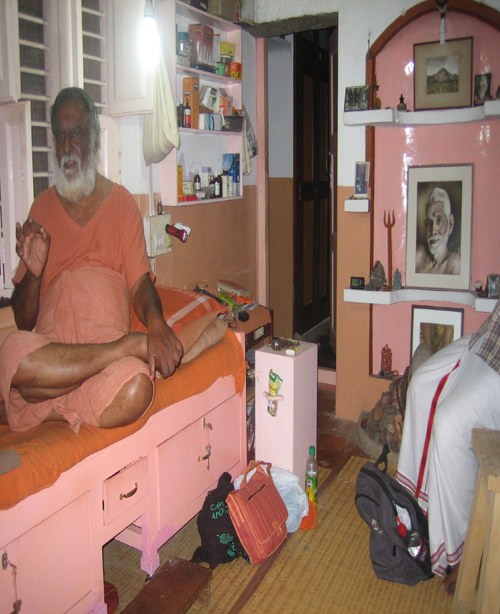
I like to thank Swami Ramanananda for a lecture on the journey of the Ego when I had visited Tiruvannamalai in southern India.

baba_for_website

And Dr Ravi Ravindra whose lectures I had attended in Chennai in January/February 2011 and from his book, ‘Whispers from the Other Shore. Spiritual Search – East and West’
16.9

Related Images:

About Doing Nothing.

Conversation with Jiddu Krishnamurti (May 11, 1895 – February 17, 1986).

Photograph of Krishnamurti with his brother Nitya, Annie Besant, and others in London 1911

Krishnamurti with friends (right of Annie Besant): Krishnamurti in England in 1911 with his brother Nitya and the Theosophists Annie Besant and George Arundale

Questioner: I have got one predominating habit; I have other habits, but they are of less importance. I have been fighting this one habit as long as I can remember. It must have been formed in early childhood. Nobody seemed to care enough to correct it then and gradually as I grew older it became more and more deep-rooted. It disappears sometimes only to come back again. I don’t seem able to get rid of it. I would like to be completely master of it. It has become a mania with me to overcome it. What am I to do?

Krishnamurti: From what you say you have fallen into a habit for many, many years and you have cultivated another habit, the habit of fighting it. So you want to get rid of one habit by cultivating another which is the denial of the first. You are fighting one habit with another. When you can’t get rid of the first habit you feel guilty, ashamed, depressed, perhaps angry with yourself for your weakness. The one habit and the other are the two sides of the same coin: without the first, the second wouldn’t be, so the second is really a continuation of the first as a reaction. So now you have two problems whereas in the beginning you had only one.

Questioner: I know what you are going to say because I know what you say about awareness, but I can’t be aware all the time.

Krishnamurti: So now you have several things going on at the same time: first of all the original habit, then, the desire to get rid of it, then the frustration of having failed, then the resolve to be aware all the time. This network has arisen because deeply you want to get rid of that one habit; that is your one drive, and you are all the time balancing between the habit and the fighting of it. You don’t see that the real problem is having habits, good or bad, not just one particular habit. So the question really is, is it possible to break a habit without any effort, without cultivating its opposite, without suppressing it through uninterrupted vigilance which is resistance? Uninterrupted vigilance is simply another habit since it is generated by the habit it is trying to overcome. Questioner: You mean, can I get rid of the habit without generating this complicated network of reactions to it?

Krishnamurti: So long as you want to get rid of it, that complicated network of reactions is actually in operation. The wanting to get rid of it is that reactionary network. So really you have not stopped this futile reaction to the habit.

Questioner: But all the same, I must do something about it!

Krishnamurti: That indicates that you are dominated by this one desire. This desire and its reactions are not different from the habit, and they feed on each other. The desire to be superior is not different from being inferior, so the superior is the inferior. The saint is the sinner. Questioner: Should I, then, just do nothing about it at all?

Krishnamurti: What you are doing about it is to cultivate another habit in opposition to the old one.

Questioner: So if I do nothing, I am left with the habit, and we are back where we started.

Krishnamurti: Are we though? Knowing that what you do to break the habit is the cultivation of another habit, there can be only one action, which is to do nothing at all against that habit. Whatever you do is in the pattern of habits, so to do nothing, to have the feeling that you don’t have to fight it, is the greatest action of intelligence. If you do anything positive you are back in the field of habits. Seeing this very clearly there is immediately a feeling of great relief and great lightness. You now see that fighting one habit by cultivating another does not end the first habit so you stop fighting it.

Questioner: Then only the habit remains, and there is no resistance to it.

Krishnamurti: Any form of resistance feeds the habit, which does not mean that you go on with the habit. You become aware of the habit and of the cultivation of its opposite, which is also a habit, and this awareness shows you that whatever you do with regard to the habit is the formation of another habit. So now, after having observed this whole process, your intelligence says, don’t do anything about the habit. Don’t give any attention to it. Don’t be concerned with it because the more you are concerned with it the more active it becomes. Now intelligence is in operation and is watching. This watching is entirely different from the vigilance of resisting the habit, reacting to it. If you get the feeling of this intelligence watching, then this feeling will operate and deal with the habit, and not the vigilance of resolution and will. So what is important is not habit but the understanding of habit which brings about intelligence. This intelligence keeps awake without the fuel of desire, which is will. In the first instance the habit is confronted with resistance, in the second it is not confronted at all, and that is intelligence. The action of intelligence has withered the resistance to the habit on which the habit feeds.

Questioner: Do you mean to say that I have got rid of my habit?

Krishnamurti: Go slowly, don’t be too hasty in your assumption of having got rid of it. What is more important than habit is this understanding, which is intelligence. This intelligence is sacred and therefore must be touched with clean hands, not exploited for trivial little games. Your little habit is utterly unimportant. If intelligence is there the habit is trivial; if intelligence is not there, then the wheel of habit is all you have got.

(Thoughts and ideas of Jiddu Krishnamurti – a philosopher and writer.)

Related Images:

Come Around Full Circle


year 2000

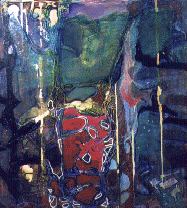
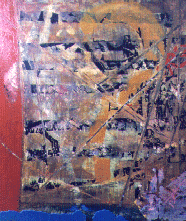
Center2?Sacred Spaces,1999/2000.
Oils on Canvas, 182cm x 152cm.
Center3?Sacred Spaces,1999/2000.
Oils on Canvas, 182cm x 167cm.


The Sacred Spaces series is of intangible Spaces. The subtle made apparent, as in the Aboriginal song below.

Tree……….
He watching you,
You look at tree,
He listen to you,
He got no finger,
He can’t speak,
But that leaf……,
He pumping, growing,
Growing in the night,
While you sleeping,
You dream something,
Tree and grass same thing,
They grow with your body,
with your feeling.

While the tangible has advantages, it is the intangible that makes it useful, points out the Chinese Master Lao Tzu, writing in the Tao Te Ching in the 6th. century B.C. Could these ‘Sacred Spaces’ be like the trees and grass, growing with ones feeling, searching for its center.

year 2009

If there is anything in my body that has let me down it is this thing called tinnitus. It is hard wired into the body and I cannot get rid of it. And I ask myself what is it doing in here? What really is its function?

‘tinnitus is the conscious expression of a sound that originates in an involuntary manner in the head of its owner, or may appear to him to do so’

“…hissing, sizzling and buzzing, these reflecting the clinical finding that tinnitus is usually high pitched.”

I gather that nobody is absent of this ringing sound in the ears or one’s head. Even those who cannot hear it has the “song” being silently played in your head.  You will hear it if you lock yourself in a soundproof room. So it exists for every single one of us.  But then I find out one day: I remember it was a bright sunny day and the ground was covered in show – the trees, the cars everything covered in snow. Yes. climate change. Then I realised that everything I did was reflected in this tinnitus sound in my head/ears. As I type these keys on my keyboard I could hear them being reflected in that T sound. As I silently speak as I type this it is being modulated in that T sound.  Any thing I do: I scratch my hand and I hear it in that T sound.  It is a complete reflection and a give away to anything I do.  You know what this means right, but the ending of time for those who want to listen in to what I am doing.

What is even worse is that most don’t know what that humming sound is about or where it comes from or why is it there or where it is made etc. But if you troll the net, tomorrows tool for world education, you might catch some good soul scientist who has done some research that will put it out there without charging a fee for the information. You know, spirituality, like “Price Tag” its not about the money, Jessie J.

In one sentence, what is this Tinnitus: seemingly it is the noise created by all the nerve impulses flowing down your nerves and brain and everywhere generating this noise.

“Nothing is heard until sound patterns, generated in the cochlea, reach the cortex of the brain, producing our first awareness of organised sound.”

This is for normal sound patterns including speech within the audible range. Nerve impulses make their way up to the auditory cortex before they are “heard”.

Same diagram but in more detail.  You have noticed that if your name is called out in a crowded place immediately you focus on the area where the sound came from filtering out all other peripheral sound to concentrate.  This takes place automatically by the use of neuronal filters in the hearing pathway.  This also applies to the sound of Tinnitus. If you focus on it in gets louder. Try it now. With tinnitus if you focus on it it gets louder and becomes an annoyance.

Between ear and brain there are 2M nerve cells forming a neuronal network, capable of sophisticated pattern recognition, enhancement and suppression of auditory signals.”

But the hearing pathway is also connected to other functioning parts of the body, to generate emotions related to certain sounds etc.  Trigger words or sounds when heard will generate an emotion.

“Neuronal networks between ear and brain detect threatening sounds and activate a reflex response involving fear/annoyance, and increase of body functions, to prepare for danger – the conditioned aversive response.”

Now look at this statement:

“In 1953 Heller and Bergman performed an simple and classic experiment. They placed 80 tinnitus free individuals (university members) in a sound proofed room for 5 minutes each, asking them to report on any sounds that might be heard. The subjects thought they might be undergoing a hearing test, but actually experienced 5 minutes of total silence. 93% reported hearing buzzing, pulsing, whistling sounds in the head or ears identical to those reported by tinnitus sufferers.  This simple experiment shows almost anyone can detect background electrical activity present in every living nerve cell in the hearing pathways as a sound. Although some areas of the auditory system may be more active than others, every neurone will contribute to some extent to the final perception of tinnitus.”

So Tinnitus is described as, ” background electrical activity present in every living nerve cell in the hearing pathways as a sound.” and also as the music of the brain’.  The music that modulates to every mechanical activity in the mindbodysoul.  The music that gives away the secrets of the body. The music that makes privacy redundant.

If tinnitus carries all the secrets of the happenings of the body and it is the result of all the neuronal activity generated in the mindbodysoul then listening in to this sound will be able to tell you a few things about a person.  It can tell about the movement of the individual. A whisper will be reflected in its sound and can be remotely obtained and decoded to reveal a secret. We think and we also silently speak: “Speak Thinking,” hence thinking will be embedded in the, “music of the brain,” and a subliminal ultrasound/microwave message can be inserted via the vibrations in the brain, to change its tune and hence the perception of the individual.

book_blue2.gif


Related Images:

Krishnamurti Foundation – Chennai, India

                                        Krishnamurti with friends:’looking together’

As an artist, Krishnamurti had showed me how my mind turns. He had reminded me that the thinking mind only deals with what is not new and is all based on time and memory. That the new comes from chance and spontaneity rather than reason. The process of painting is a good tool to remind you that the Truth of things lies in the Kalichakra mind, a mind that uses thinking only for practical needs and that progress comes from the timeless ‘downloads’ from the unmanifest universe. Painting will allow you to feel this and hence ‘see’ it through your paintings. To allow chance to help you see the unmanifest world, your mind has to sit in a certain way: being silently aware in ‘choiceless observation’, where time is not, and the mind silent and only looking but without thinking: the one-pointedness in the process of painting and the silence that comes with it can then allow insight ‘downloads’ to occur that help you ‘see’ the new in Art. The new does not come from thinking which is from time based memory and hence from the past. J. Krishnamurti is an artist’s best friend. And below in his own words is a summary of K’s direct observations.

‘The core of Krishnamurti’s teaching is contained in the statement he made in 1929 when he said, “Truth is a pathless land”. Man cannot come to it through any organization, through any creed, through any dogma, priest or ritual, not through any philosophical knowledge or psychological technique. He has to find it through the mirror of relationship, through the understanding of the contents of his own mind, through observation and not through intellectual analysis or introspective dissection.

Man has built in himself images as a fence of security—religious, political, personal. These manifest as symbols, ideas, beliefs. The burden of these images dominates man’s thinking, his relationships, and his daily life. These images are the causes of our problems for they divide man from man. His perception of life is shaped by the concepts already established in his mind. The content of his consciousness is his entire existence. The individuality is the name, the form and superficial culture he acquires from tradition and environment. The uniqueness of man does not lie in the superficial but in complete freedom from the content of his consciousness, which is common to all humanity. So he is not an individual.

Freedom is not a reaction; freedom is not choice. It is man’s pretence that because he has choice he is free. Freedom is pure observation without direction, without fear of punishment and reward. Freedom is without motive; freedom is not at the end of the evolution of man but lies in the first step of his existence. In observation one begins to discover the lack of freedom. Freedom is found in the choiceless awareness of our daily existence and activity.

Thought is time. Thought is born of experience and knowledge, which are inseparable from time and the past. Time is the psychological enemy of man. Our action is based on knowledge and therefore time, so man is always a slave to the past. Thought is ever limited and so we live in constant conflict and struggle. There is no psychological evolution. When man becomes aware of the movement of his own thoughts, he will see the division between the thinker and thought, the observer and the observed, the experiencer and the experience. He will discover that this division is an illusion. Then only is there pure observation which is insight without any shadow of the past or of time. This timeless insight brings about a deep, radical mutation in the mind.

Total negation is the essence of the positive. When there is negation of all those things that thought has brought about psychologically, only then is there love, which is compassion and intelligence.’  Copyright ©1980 Krishnamurti Foundation Trust Ltd.


Vasanta Vihar Study Centre, Chennai

The centre of life in Vasanta Vihar is The Study-a library housed in a spacious, elegantly designed hall on the first floor of the main building. It has a range of materials:

•Books by Krishnamurti, translations of his works, copies of out-of-print materials, biographies, evaluative studies of the teachings, bulletins and newsletters of the Foundations, select books on religion, philosophy, psychology, literature, and arts, and journals of a serious nature.

•A large video collection, with synopses of each programme, and video-consoles for individual viewing.

•Audio collections and CDs.

•A separate Lending Library enables people to borrow books and tapes.
The Study organizes dialogues, weekend retreats, video programmes, and lectures from time to time.

This Study Centre is also responsible for the dissemination of the teachings in India and the neighbouring countries. It therefore encourages local initiative of individuals in different parts of the country to start small study centres which have reading rooms and library facilities and hold dialogues from time to time. KFI supports such ventures with initial donations of books and tapes and interacts with them.
From their website: http://www.kfionline.org/studycentres/vv.asp

There is decent accomodation provided and wholesome vegetarian meals are served. The center has a quiet environment suitable for study and reflection.

Visitors are reminded that the place is a study center for Krishnamurti’s teachings and not to be used as a base for sightseeing etc. This place exists for the sole purpose of studying Krishnamurti’s teachings. Those seeking accommodation here are, therefore, requested not to treat it as a convenient lodging house or as a base for sight-seeing or transacting business. ‘. (http://www.kfionline.org/studycentres/vv.asp).

The center sits on about 6 acres of landscaped grounds and makes a pleasant place to ponder on the state of one’s thinking mind.

Group study sessions can be organised for those staying at the center. These sessions will be follow up discussions after time has been spent at the library to clarify some of the points that Krishnamurti makes in his teachings. The center is run by staff that will make your stay as comfortable and pleasant as possible. Please check the website for further information on week-end retreats and for other events.
The state of one’s mind creates the state of society today and Krishnamurti’s teachings will carry itself into the new world order as it unfolds itself in the new millenium.

Contact:
Krishnamurti Foundation India,
Vasanta Vihar,
124 Greenways Road,
Chennai–600028.
Tel: (044) 24937803 / 24937596.
E-mail: kfihq@md2.vsnl.net.in

yesterday

today

Continue reading

Related Images: