The Significance Of The End Product In Art

Before we see this, ‘the significance of the end product in the arts’, we need to first look at some teachings from the past to get some sort of a big picture, so we can get to see the place of the artist and his work in the universe.

There seems to be an obstacle to satisfaction in the process of making art. The difference between the mystic and the artist is that the mystic is quite happy to be standing still. For him, ‘stillness speaks’, but for the artist he has to keep feeling his way through his art until he realizes it is not going to come to an end. The process drives the artist through all the crevices and you come up with mainly dead ends. The manifestation of this process is the art work. The end product is only part of the process. The art work throws light on that journey. It shows the viewer, through its excavations, its mistakes, through the coming together of form, through the history of the works, something of the ‘Intelligence in nature.’

‘….Earth in its entirety is indeed a living, breathing organism with an intelligently (albeit instinctively) coordinated sense of its own existence and purpose.’ (J.S Gordon, ‘The rise and Fall of Atlantis.’)

The process of making art is but a mini replication of the greater. There is something of the way a work of art falls into place when it is completed that is similar to the way the universe has fallen into place amid the chaos into order. Only an artist struggling with form to make art can truly feel this when it happens. You know it by doing. And it is repeated with each work. He/she starts to feel a coming together and senses that ‘intelligence in nature’ at work. After a while you take the invisible forces at work for granted and make it part of the process. It becomes a way you finish off a work of art. You know it will naturally bring itself to completion. And you will instinctively know when it is not there yet.

Art is a valuable database for the natural Truths and the structure behind the intelligence. It comes through the personality of the artist and through the flavour of his own form in his mind.

Today, even the scientists are confused about what they know of the structure of the universe. So let us look at some ancient literature as to what they say about the invisible forces of the universe. This is relevant to the artist as he is working up against this in his process of the work that he is trying to manifest. The idea of his work comes of the form that is in his mind and his mind, whether he likes it or not, is connected to the structure of the intelligent universe, both visible and invisible.

‘In 1988, Professor James Lovelock, a fellow of Britain’s prestigious Royal Society, put forward the then apparently revolutionary idea that every part of the Earth, including its rocks, oceans and atmosphere, as well as all organic entities, was a part of one great living and intelligent organism.’ (‘The Rise and Fall of Atlantis.’)

If you open up the Sikh holy book, these are the first few lines you will read.

The one God
Whose name is Truth.
The Creator.
Who is present in all Creation
Who fears none.
Who hates none.
An immortal being beyond time.
Unborn
Self existent
attainable only through divine grace.

Meditate.
True in the Beginning.
True throughout the Ages.

True even Now.
says Nanak (Sikh Guru),Truth will always be here.

The truth comes from everywhere, so at times it is OK to just look over the edge of contemporary thinking, over the pages of cool contemporary magazines and art books, to see where the process is coming from. You must remember cool is yesterday and today, time rolls back to the days of Kandinsky at the turn of the last century. It was a time of the NEW in art with the advent of abstraction. Like Kandinsky did in his time: he looked at the Kalevala: Finish mythology, and he was fascinated by the life of the Shaman: a person who has been to the brink of death and then back again, now all knowing. He carried the book ‘Thought Forms’ from the Theosophical society with him at times. Then came, ‘Concerning the Spiritual in Art’, by Kandinsky. In today’s contemporary art schools: spirituality is not a valid reason for subject matter for the work. But as science and mysticism comes together we start to very rapidly see what our limitations are and what the work is all about and that the final product of the creative process is only part of a bigger happening. The Sikh holy book, the Guru Granth Sahib, reminds us in the very first few lines, just how vast the process of the creative wave really is. It gives you an idea of an underlying intelligence that permeates all and will always be true.

The spark in ones own mind can come from many different places. This is also a component of how the Whole perhaps works. I was at a talk by J.S Gordon on his new book, ‘The Rise and Fall of Atlantis’, but more on some of the reasons for climate change by looking at the history of the formation of the universe, from chaos to order, and an underlying order that is cyclical, yet very precise. This explained the cataclysm that ended Atlantis. And it is here again today. It was by looking at this structure of the universe and its possibilities that the point was made, that perhaps within our galaxy, we live within a sphere of consciousness that is contained, because of the forces that hold the different parts of the universe together (see diagram below).
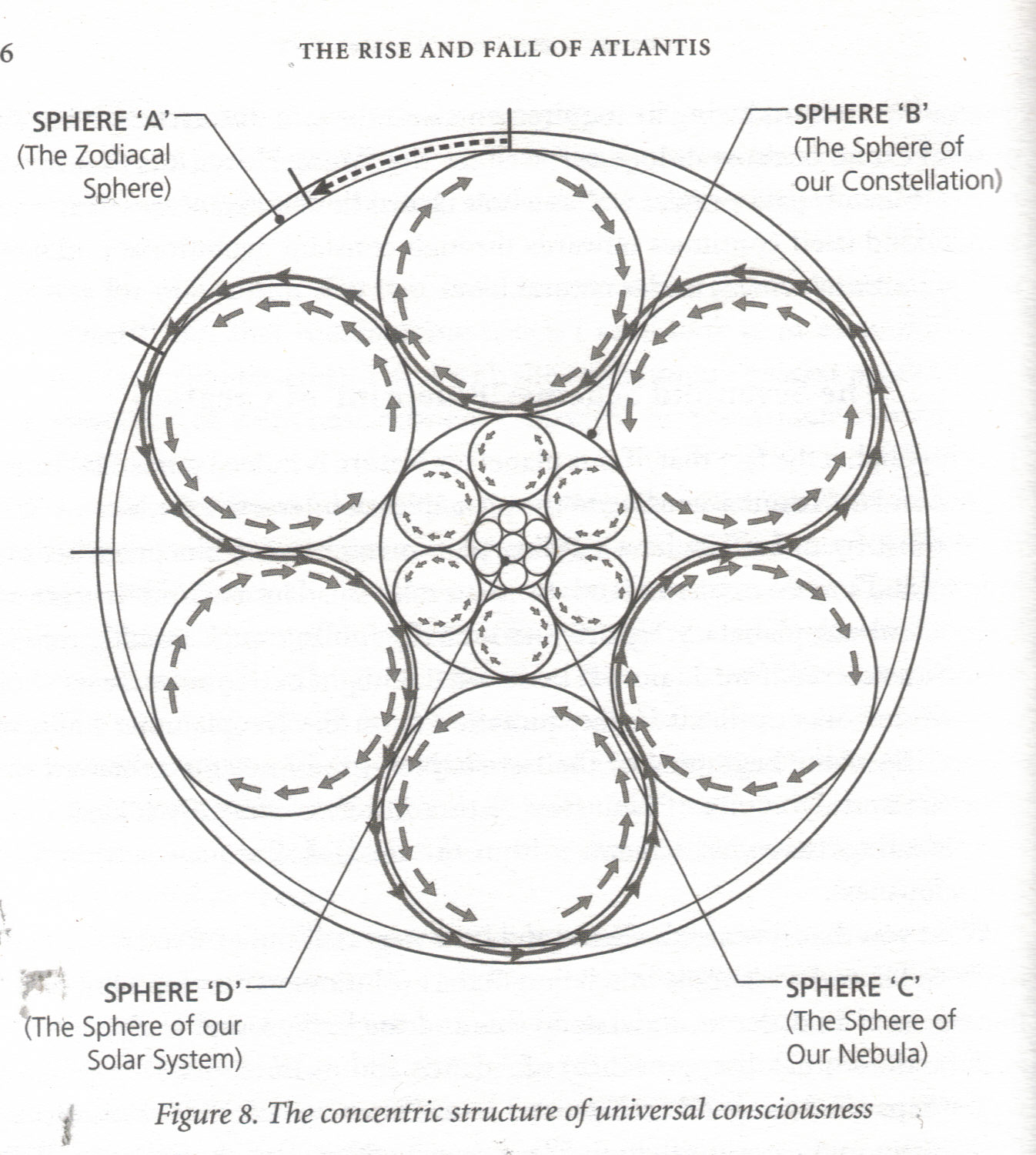
These forces interact, but can remain distinct. And this can also be reflected by our own group spheres we live by and hence the limitation. We cannot perceive outside this bubble. More importantly we have to create this circle of limitation for us to generate an idea, to think coherently. This is where the flavour in our work comes from. The personality that is created in this sphere comes through in the work. It was the fact that the conscious whole had to be capped for the mind to create, to work, was what fascinated me. Remember that the artist works within the limits created by his own mind and also within the limits of his medium: the painter limited by a flat two dimensional space and its edges. He first looks from outside the canvas, from the vast universe and all it holds, both the tangible and the intangible and then filters it down into the image that he creates. It implodes through the artist into his work. The vast forces of the universe was also organized in this way. From big to small. As above so is below. Our minds are limited to function. ‘That is why with each work of art, the process always leaves the artist with a taste of dissatisfaction in his mind.’ I am trying to recall what was said. That is perhaps why the looking never ends. But then if you see it as it is, then you have it. The transformation comes from accepting this fact: that we operate within limits and we will never see all. The process will allow you to see this.

‘Man was seen as being unable to make his escape from one cycle of existence (or state of being) to another – except subjectively and at the critical points of transition between one celestial cycle (or state of being) and another…..’ and also ‘ It was for this reason also that each new cycle was seen as producing its own ‘zeitgeist’……..We use the expression ‘zeitgeist’ to mean the influential ‘Spirit of the Age’, from its literal meaning in German, although the modern interpretation of that expression gives it the flavour of no more than some sort of unspoken communal human perception of, or instinctive urge towards, cultural change.’ (J.S Gordon, ‘The rise and Fall of Atlantis’)

And also there is ‘zeitgeist’ and there is ‘zeitgeist’. To the ancients, the ‘Spirit of the Age’ was an ‘avatar’. With us, what you see now is of the last 100 years. The ‘zeitgeist’ is what you are living in today: the flavour of the century. And I think today, it is now in transition again, with the recent banking failures, the population sees how vulnerable the man-made system is, and its group consciousness will see it make a change. Add to this a couple of volcanic eruptions because of the ‘compressional and expanding forces’ of the universe, an earthquake here then there and you are looking at change. People get bumped around in this process and they start to ask questions or rather they start to think. We don’t see it until we live through the process of the system, dismantling the system. It is not very dissimilar to what the artist feels as he follows the process of making art. But we, the group, consciously will do it ourselves. We are in the process of making something new for us to live in, because we see the Truth in the limitations of the past. ‘As they did historically in ancient Rome, Greece, communist Russia…..’ Nature allows us to make and break systems. Well the artist, he sits coolly among all this and also functions just like it, in his own bubble: and he wonders why he is not seeing it yet. As the greater process functions, so does the artist as he lives creatively making art. Though the artist deals with the material object, the devotion to his craft has attuned him to non-material concerns. He is a function of the greater process: a micro entity of the ‘intelligence’: contained in a sphere with his own limitations and trying to decipher the big picture with his art.

‘The ancients saw the universe as a concentrically organized sequence of fields of consciousness, this being to them a universal principle.’ (‘The rise and Fall of Atlantis’ J.S Gordon.) As you can see from the diagram earlier we sit smugly in the center, in our little worlds, with our limitations and think we are the biggest thing since sliced bread. You know what I mean. Now if this is the big picture and we are really enclosed in the sphere of limitations not being able to see the landscape of the structure we live in: then we have to accept this. Progress comes from accepting this. We see that everything we make is an illusion, every idea is not real, but it may be an indicator of the manifestation of the invisibility and vastness of the space we live in, then perhaps we can unfold and progress. It is to bring on a settlement so a new space can become.

History of the universe has been a cycle of chaos and order. The making of us and the destroying of us: order and chaos. Atlantis was an example of this. In this cataclysm the new is created. As in art, it is only the look for the NEW is relevant. It is a personal opinion. It is the driving force for the unfolding of the race and evolution. ‘…..The ancients saw consciousness unfolding and then evolving……’ (‘The rise and Fall of Atlantis’). To bring this to a close quickly it is sufficient to say, from looking at J.S Gordon’s work on Atlantis, that these cyclical nature of the universe would bring on a series of states or ‘planes’ of consciousness within our local solar universe, that little circle in the center of the diagram. We evolve through 7 planes of consciousness (The current race is 5 and on the 5th plane). The flavour of this evolving nature of the races is one of involution becoming more egocentric, with increasing amounts of mass desire and by the 3rd race more grounded increasingly in physical matter. By the 4th race the concept of Mind, desire and physical form is fully integrated. ‘From the middle point of this race (4th) the process of evolution commences, the desire principle now becoming increasingly personalized and dominant in each individual and each local group. Correspondingly, in the present Fifth Race, it is the mind principle which is becoming increasingly individualized and dominant in the integrated personality and the local group.’ The seventh race returns to the first race and both races are spiritual in nature and the cycle repeats itself. As it did in Atlantis, the catastrophe will bring an end to one form for it to evolve to another. Another diagram from the book on the different races, ‘The Rise and Fall of Atlantis’ by J.S Gordon ISBN: 978-1-905857-43-2)
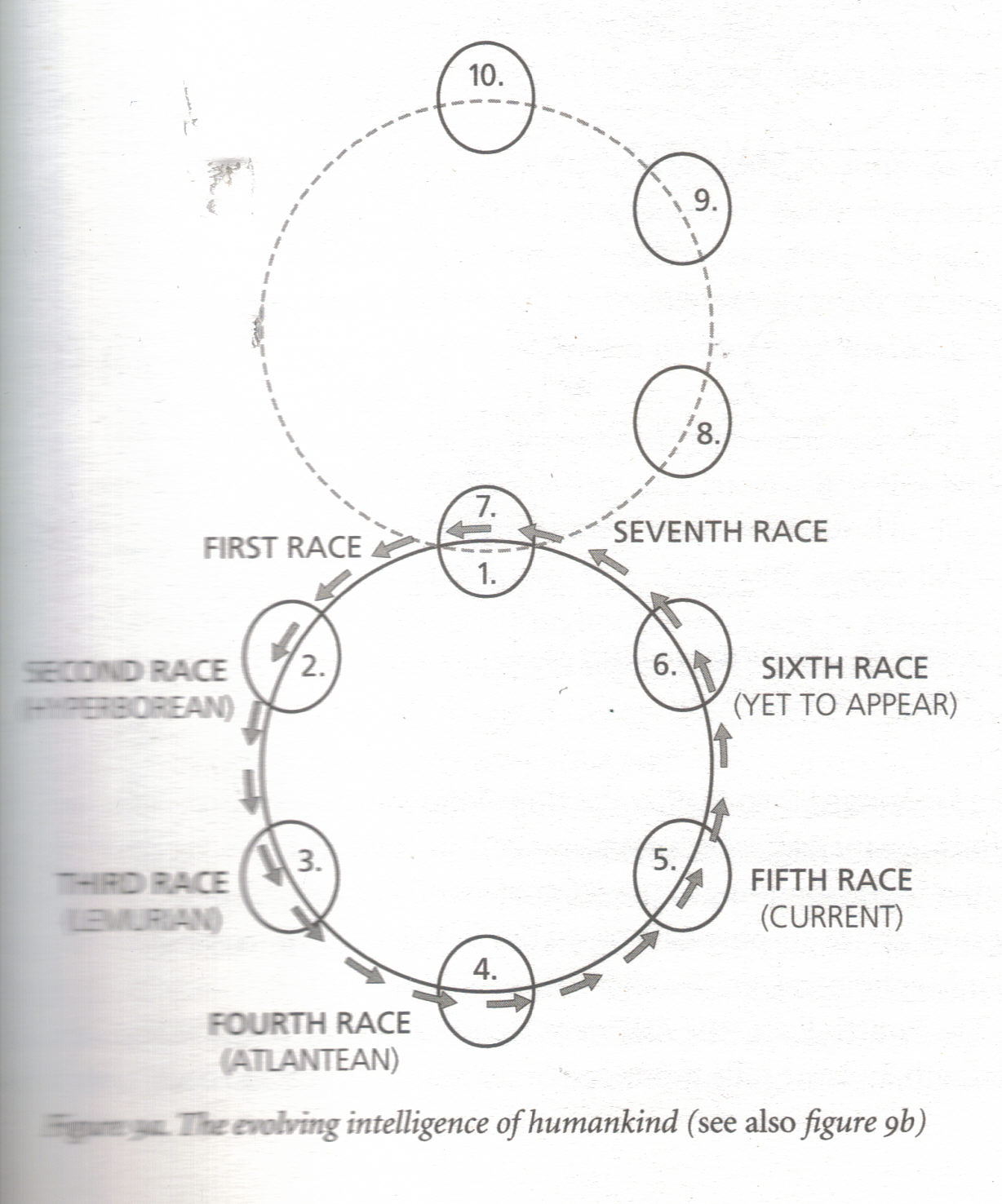
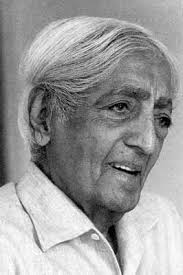
We are now in the 5th race, though still tied up to the object, desire, materialistic in the way we live but we are in transition. In the 5th race (us) the mind principle becomes prominent in the individual. We have just been through a process where the illusion of the structure we made for ourselves to live in started to show its weak areas. We could at one time almost see the possibility of the illusion crumbling. It had changed the lives of some, where all of what they thought was secure they lost: their homes, money etc. The mind gets stuck on things like this. When a lot of minds get stuck on such matters we get change. The structure of the ether changes. You witness the ‘rise and fall’. There is an awakening of the ‘Intelligence’ in the mind. I like to finish with a quote by Jiddu Krishnamurti on how the intelligence is woken by the discovery of a fact behind the illusion.

‘You see, intelligence is not personal, is not the outcome of argument, belief, opinion or reason. Intelligence comes into being when the brain discovers its fallibility, when it discovers what it is capable of, and what not.’ I think what K is trying to say here is exactly what is going on now in all our minds. Does this structure we live in now: is it real. We saw glimpses that it may not be real, only an illusion. When you see a fact, and its relationship to a fallacy, there is something in you that alters. A new presence makes itself felt in you because of that experience. The presence is a kind of ‘intelligence’ that can now operate through you. ‘And only when that intelligence, is functioning can the new dimension operate through it.’ The new you, as a result of seeing a universal Truth, now continues the evolutionary process towards the 6th race. So, as for the artist, in a different way, when he gifts you with the NEW in his work, he changes you forever and invokes that ‘intelligence’ to function in the NEW you.
Related Images:

Freedom from the Known by Jiddu Krishnamurti

‘For centuries we have been conditioned by nationality, caste, class, tradition, religion, language, education, literature, art, custom, convention, propaganda of all kinds, economic pressure, the food we eat, the climate we live in, our family, our friends, our experiences – every influence you can think of – and therefore our responses to every problem are conditioned.’

So this is how we are made. We have become this through our conditioning. You only have to look at the way we dress in different parts of the world: we all have a kind of uniform to represent ourselves. How does this come about: it comes about by being made to be so. Your mind has become because of conditioning. Out of that rigid structure created by you, you remain there making art. That morphogenetic field that Rupert Sheldrake talks about is firmly in control. Living dogmatically. Freedom from the known, is to get out of this conditioning. ‘And when you look with freedom it is always new.’ The new in Art is the driving force that will advance the front-line of art in ways that you cannot expect. At the turn of the last century (1890 to 1920), when Artist finally dropped realism for abstraction, there was a coming together of people, literature, conversations, spirituality: India, Europe, China…: and this brought on abstraction which we today accept as valid and continue to live with it. It is fully integrated into our psyche. What was it in the minds of those that brought this about. What does it take to invoke the New.

The mind has to sit in a certain way not to be a victim to conditioning and to recognize dogmatic behavior. One thing that is important with Krishnamurti is that the process of seeing (and ending) that you are conditioned must be natural. If there is a method to the process then it becomes dogmatic. And this also applies to making art I think. If there is a method to doing your work, then you are following a conditioned path and you will produce work that will not venture out of its mould. This is also a danger with getting caught up with technique. Technique can be important but it must be secondary to looking for the new. You can see the danger of this too: when I make a judgment like I just did I am in danger of conditioning myself of that fact.

‘To understand anything you must live with it, you must observe it, you must know all its content, its nature, its structure, its movement. Have you ever tried living with yourself? If so, you will begin to see that yourself is not a static state, it is a fresh living thing. And to live with a living thing your mind must also be alive. And it cannot be alive if it is caught in opinions, judgements and values.’

‘In order to observe the movement of your own mind and heart, of your whole being, you must have a free mind, not a mind that agrees and disagrees, taking sides in an argument, disputing over mere words, but rather following with an intention to understand – a very difficult thing to do because most of us don’t know how to look at, or listen to, our own being any more than we know how to look at the beauty of a river or listen to the breeze among the trees.’

Remember you are loaded with a rigid past in your mind. You have to first accept that you are shackled to your past and you are living off that information from your experience and your past. Some might think that this is cool. I am me. And I am going to be more me tomorrow. So whats wrong with that: it becomes an obstacle to you seeing your real self. It makes you look through your conditioning.

‘When we condemn or justify we cannot see clearly, nor can we when our minds are endlessly chattering; then we do not observe what is we look only at the projections we have made of ourselves. Each of us has an image of what we think we are or what we should be, and that image, that picture, entirely prevents us from seeing ourselves as we actually are.’

‘……the simplicity that can look directly at things without fear – that can look at ourselves as we actually are without any distortion – to say when we lie we lie, not cover it up or run away from it.’

To rid yourself of your conditioning you have to follow it. To be aware of it when it comes up. To recognise it and follow it to see what it does to you without judgement. Without judgement is important, as judgement means making it an experience. The magic of being aware of your conditioning is that when you see it and understands what it does to you: it then comes to an end. You have naturally brought it to an end. It was not a method that brought it to an end. If it was a method, like meditation, that was used to end it, then the trait has not ended. It was only suppressed and will show itself again in time. But if it naturally comes to an end through observation, it has ended. It is still there with you; it will always be part of the process that is you: ‘the observer is the observed’; you are not outside of what you observe, it is you what you see, but it won’t show itself again as you have followed it to its end and understood how it works.

I think the perfect state ( I recognize that I am making a conclusion here and the truth of it to be recognised through observation only) is one of awareness and action. The new is discovered by keeping the mind free only to observe without conditioning, and to manifest the discovery through action. Action is a busy time for the psyche. It involves thinking, making, lots of noise and chatter in the mind. But the mind has to return to pure awareness and observation as its restful state. And continue through observation to bring all its conditioning to an end. To finally live in stillness. The still mind lives with no judgement to push itself into a corner, as it always returns to the center. A still mind is fully attuned with the universe and all its happenings. You live in harmony with the greater ‘intelligence’. And when you are there I cannot tell you what it will be like.

Is art just a prerequisite or is there the urge to create when one is still?

(all comments from, ‘Freedom from the Known’ by Jiddu Krishnamurti.)

Related Images:

‘Who is that person you call an artist?’ by Jiddu Krishnamurti

Krishnamurti (K) was not much of a fan of image making by the conditioned mind. As for the artist and art he had a few things to say in his time. His approach to the arts was that the artist and his work should be holistic in nature.

jiddu Krishnamurti

Who is that person that you call an artist? A man (or woman) who is momentarily creative? To me he is not an artist. The man who merely at rare moments has his creative impulse and expresses that creativeness through perfection of technique, surely you would not call him an artist. To me, the true artist is one who lives completely, harmoniously, who does not divide his art from living, whose very life is that expression, whether it be a picture, music, or his behavior; who has not divorced his expression on a canvas or in music or in tone from his daily conduct, daily living. That demands the highest intelligence, highest harmony. To me the true artist is the man who has that harmony. He may express it on canvas, or he may talk, or he may paint; or he may not express it at all, he may feel it. But all this demands that exquisite poise, that intensity of awareness and, therefore, his expression is not divorced from the daily continuity of living’ (Total Freedom: Krishnamurti foundation of America)

Besides being holistic, there is also that question of ‘purpose of life’. At some stage in the artists career he is going to ask himself this question. When I asked the artist John Hoyland in his studio, when he was in his 70’s, (see previous article ‘John Hoyland: Today’s Turner’ from www.siriperera.com) as to why he still had to keep painting: he said because he just had too. There is something of the Truth in this answer if he is to follow the ‘movement of creative thinking’ as Krishnamurti points out. Once you are riding on its wave, you know you have to keep going, to keep looking, to keep creating because with it you are fully in touch with the very process of creation and existence. ‘Fully alive’ as K points out later in this text. But first there does not seem to be common ground in our search for purpose.

The artist is looking for it through his art, ‘(he) will tell you that it is self-expression through painting, sculpture, music, or poetry; the economist, if you ask him, will tell you that it is work, production, cooperation, living together, functioning as a group, as society; and if you ask the religionist he will tell you the purpose of life is to seek and to realize God, to live according to the laws laid down by teachers, prophets, saviors, and that by living according to their laws and edicts you may realize that truth which is God. Each specialist gives you his answer about the purpose of life, and according to your temperament, fancies, and imagination you begin to establish these purposes, these ends, as your ideals.’

K says that we create an illusion, a false environment by conditioning, we live in it, and we look in there for the Truth, the purpose of life. We tend to ‘work towards an end, a purpose. You wade through this turmoil to the goal, to the end, to the haven of refuge, to the attainment of ideal; and these ideals, ends, refuges have been designed by economic, religious, and spiritual experts.’ There is no common ground.

And so for the artist what is his Truth of purpose before he finds his expression. Perhaps it begins and ends in the same place:

‘The very inquiry into the purpose of life indicates the lack of intelligence in the present; and the man who is fully active – not lost in activities, as most Americans are, but fully active, intelligently, emotionally, fully alive – has fulfilled himself.’

What he means by ‘fully active’, ‘fully alive’: with total observation, without conflict in the mind, primed up for watching through being aware of your space, without judgement, without being conditioned, and always remaining in the center. You have to come to this state of being ‘fully alive’. The enquiry into the end is futile, as he says there is no such thing as an end and a beginning: there is but the continual movement of creative thinkingand more importantly it is that movement right now. What you call problems are the results of your ploughing through this turmoil toward a culmination. The ideals you look for are set up by the false environments that you have created for yourself. So essentially what you are doing is already trying to arrive at an ideal, which you will discover, is something not of an ideal after all. They are ‘just escapes from the present turmoil.’ There is only that ‘movement of creative thinking.’ Dealing with the environment as it is just now. The creative intelligence deals with just that, without the experts who create the false environments for you to be in and make purpose and initiate beginnings and ends and goals you grind yourself towards. So according to K, the end purpose and only purpose is learning to be fully in the present. To bring yourself to that point and stay there, you look at the movement that is you, in you, your mind, your daily activities, and watch them without judgment, to be in complete awareness, to only observe, to watch the cycles that repeat themselves because of lack of observational understanding and see how they come to an end when you follow them and see them clearly. ‘The observer is the observed’: what you observe is you and not outside of you. You are not separate from it. There is no method in the process. It is a naturally occurring process of observation, just as you are, watching your mind and everything around you. Bringing to an end the unnecessary process of psychological thinking and protest, so it does not get into the structure of the image. The noise of the mind then flattens out when these are gone. You are then left with pure awareness, just observing, completely understanding every movement, both externally and internally. Being complete and one with the environment and hence living in complete harmony with the vast space of the universe. And making art from here. Totally free to discover the NEW. Total freedom.

The mind has to first naturally find its way to this space. Naturally and not through a method, as intangibles obtained through a method is not permanent. They only exists when the method is in use. The destructive patterns come naturally to an end. This is bringing something naturally to an end, by just ‘watching’ it. The stillness comes as a result of this ‘watching’ while being completely alert to things at all times. Initially you might have to remind yourself to be alert, but with time it comes naturally, like breathing.

When Elton john was asked why does he still keep writing songs, when he does not know what he is worth and will never have to worry about his next cup of coffee, he said, ‘ because I am trying to find that ultimate song’. Is it what he is saying is that he is still looking for that ultimate something NEW song that will stand out of all the other songs that is in existence, and transform us forever with the NEW. Then I feel this is not going to come from thinking, but by being empty minded in the now, calm, noiseless, steady, and then suddenly there it is, sitting in you mind, like magic, and not knowing where it came from. Thinking yourself into something uses tools that are already in existance, your past, your hopes for the future, all coated with your experiences and hence conditioning. How can the new come from data that is already known. Freedom from the known is also a point that K puts forward in his talks. The new has to come from non existence, from nothing. But being one with all and to allow this to happen, the device of mind has to be primed to receive. Your living space that your mind has created to live in, is an illusion, and if you live in an illusion and you look for the Truth using the coordinates of an illusion, you are looking outside the realm of the naturally true.

The process and the purpose is: to be, so all is known without thinking, and action to manifest a discovery.

You have to get to stillness first, before you start making timeless art. Finding the new and adding it to the front-line of art. In the process, transforming viewers who come across the work. There can be no other purpose in this ‘futile’ obsession. The artist to be in contact with the universe by being as close to the structural energies of nature. To recognise conditioning in himself, to live outside the illusion, to be free of all that is known so that the new is accessable and to be totally free to create art that is timeless. Making work that will always be true to its time because its presence is that of the very essence of nature. I like to finish with a quote from a book by Karen Armstrong on ‘Buddha’, that before Christ ascetic from today’s Nepal and yesterdays India, around 300 BC who found that quiet center:
‘Nibbana (enlightenment) is a still center; it gives meaning to life. People who lose touch with this quiet place and do not orient their lives toward it can fall apart. Artists, poets and musicians can only become fully creative if they work from this inner core of peace and integrity.’

We have to finally ask ourselves: are we, yes us, creating a brave new world for ourselves. We are all responsible for both the tangible and the intangible part of existence. This wholeness, the totality of existence, is brand new at any moment, created by us, as we bring it into existence. Everything, all the good and the bad, keeping in mind that there is no good and there is no bad as they are all part of the structure of existence (especially in the arts: so called ‘bad’ art, shows the way for the ‘good’ art, and if you see the truth in this you would price them equally and enjoy it for its power to point the way forward) AND THAT there is only that,’movement of creative thinking.’ The front-line of existence being created by: artists, economists, teachers, guru’s, mystics, killers, parents, muggers, presidents, kings and queens, drug dealers, microsoft, corner shop owners, schools etc. and at any moment, you look at it and you see what you got and you work with it. Never the same from one moment to the next, constantly being made and the artists, I would like to think, has a very positive part to play in this creation. And they will know what it feels like to ride the wave of the creative experience.

And to end this:

There is no guide to truth (in Art)

Is God to be found by seeking him out? Can you search after the unknowable? To find, you must know what you are seeking. If you seek to find, what you find will be a self-projection; it will be what you desire, and the creation of desire is not truth. To seek truth is to deny it. Truth has no fixed abode; there is no path, no guide to it, and the word is not truth. Is truth to be found in a particular setting, in a special climate, among certain people? Is it here and not there? Is that one the guide to truth, and not another? Is there a guide at all? When truth is sought, what is found can only come out of ignorance, for the search itself is born of ignorance. You cannot search out reality; you must cease for reality to be.

J. Krishnamurti, The Book of Life

Related Images:

Artists, Groupthink and Mophogenic Fields

I was at a talk by Rupert Sheldrake (www.sheldrake.org) recently at the Theosophical center in London. This was a great moment of Cambridge science and Esoteric science coming together. The theosophical society has had a big part to play in the advent of abstraction through Kandinsky and Mondrian who were both theosophists (see previous article by John Algeo on the societies contributions to the arts).

Rupert Sheldrake is a scientist at Cambridge University and he had put forward the theory of Morphic Resonance. He suggests that there is a database of information that is created and stored by the working of social groups. This is not stored in the brain but outside of it. In the ether. And the field develops according to the feedback it gets from the participants by morphic resonance. The field strengthens with time as the group grows according to the information it gets from this field. One can see why cultural patterns emerge in different parts of the world as groups. It feeds off the same data or morphic field that is created and it exists because of the group. Like a group of artist.

Artists around the world (with the help of the internet) will be part of an elaborate field, both locally and universally. As the field expands and changes from feedback due to improved communications, you will find that the world of art in China say, will start to take on more western forms. Its old forms that characterises the Chinese look will metamorphise into new forms. The important think to realize about a mophogenic field is that it is a template. If you cannot work yourself out of that template you can become predictable without knowing it, as you constantly, unknowingly, feed of this field. So finding the new, the truly new, will be difficult to come by, both because you are ‘stuck’ with this data of information but more importantly, the groups that live off these fields, will not recognized what is truly new. The ‘new’ will always be, that little bit that is different plus a lot of what already exists. Or more like, the work will always be the same, feeding off the same data over and over again without knowing it. So progress is this predictable ‘frontline’ of forms, concepts, colors, dragging the past along its path.

Morphic field” is a term introduced by Sheldrake. He proposes that there is a field within and around a morphic unit which organizes its characteristic structure and pattern of activity.[12] According to this concept, the morphic field underlies the formation and behaviour of holons and morphic units, and can be set up by the repetition of similar acts or thoughts. The hypothesis is that a particular form belonging to a certain group which has already established its (collective) morphic field, will tune into that morphic field. The particular form will read the collective information through the process of morphic resonance, using it to guide its own development. This development of the particular form will then provide, again through morphic resonance, a feedback to the morphic field of that group, thus strengthening it with its own experience resulting in new information being added (i.e. stored in the database). Sheldrake regards the morphic fields as a universal database for both organic (living) and abstract (mental) forms. (wiki)

If you cannot break off that loop you will wonder why, in art, new radical form and ideas are difficult to come by. A little bit of this and a little bit of that from the past, from the Morphic field, that database of past ideas that you feed off but don’t know it is there and going nowhere in your work. The MORPHIC FIELD is the home of GROUPTHINK. The NEW transforms, and I like to suggest is the main purpose of art. An experience, an idea, which lifts you into a new space, instantly. You see it and you have it. You will never be the same again after such an experience. The excitement of the New will not come from feeding off the Morphic field or Groupthink. Increasingly we are beginning to discover, or the mystics have always known, that we are ‘shackled’ to a universe that insists in maintaining its balance and one that also makes us function in specific ways.

Unknowingly we create ourselves off a template.

This concept of the Morphic Field has been around in India via the Vedas.

Also, he (Sheldrake) agrees that the concept of Akashic Records, term from Vedas representing the “library” of all the experiences and memories of human minds (souls) through their physical lifetime, can be related to morphic fields,[13] since one’s past (an Akashic Record) is a mental form, consisting of thoughts as simpler mental forms (all processed by the same brain), and a group of similar or related mental forms also have their associated (collective) morphic field.’

In his talk, Sheldrake did mention in fleeting that it is possible that Creativity might function outside the morphic field. This mechanism of finding, creating, as it turns via the mind of the artist might stand apart from the ‘field’ and outside it. It does not have to work with the ‘field’. He also did mention that we still did not understand how consciousness worked. The mystics of yesterday and the scientists of today are starting to come together. They are in partnership today to show us what New is. And the Artists were always in the thick of it, through form, colour and composition, to show us how the process functions, how the mind turns and to find for us, what is means to experience something truly New.

(Sheldrake has spent time in India. From 1974 to 1985, he worked in Hyderabad, India, where he was Principal Plant Physiologist at the International Crops Research Institute for the Semi-Arid Tropics. For a year-and-a-half he lived in the ashram of Bede Griffiths, where he wrote his first book, A New Science of Life.[4])

Related Images:

Artist Groupthink: Like Going Nowhere

Artist groupthink: like going nowhere

Recently there was a reality artist TV series by Charles Saatchi, where he had a group of artists making art, with initially a given subject matter and then finally given the freedom to do their thing. One underlying matter that came across from the judges was the requirement of subject matter. ‘I look at it and I must get it at first glance’ or something similar: I think it was Tracy Emin. You can see that the judging was based on about getting it. You know ‘getting it’ is a mental activity. The mystics say that thinking is an action of the mind, like walking, seeing etc. of the sensors. If you can stop walking when you want too, or stop seeing by dropping your eyelids, then you can stop your mind, stop your thinking when you want too. When a thought appears: you put it away. If you do this often enough, you will see that the ‘spike’ of energy that is thought will cease to arise. But then what have you got left after thought has ceased. Now that is where the magic lies. That is where you will find the true home of great Art. In that quiet (but not empty) space is another way of seeing: seeing without thinking. Seeing without time by being only aware of what you are looking at, without making a judgment, without thinking. That is ART without a subject matter. It is only what it is because of its form, composition, color and whatever else that goes into making a painting, a sculpture, an installation. The object emanates something that will trigger a transformation. It is NEW without a past. It has no links to the frontline of art. It is not a result of

groupthink

That is where the NEW in Art can manifest itself . It is a place where spontaneity, chance, play and intuition will show you what’s new. It is a place where a mistake is made and you chase it for something new. Art that is created from that quiet space of only being aware, without thinking. It has no subject matter. It is without a past. Its future is eternal: forever it will be true to the viewer. It has no narrative to put it in its place, to give it time. It has no history. You cannot make reality TV with it. Initially it will be confusing as it has no place in the mind of viewers to put it in its place. It stands so far off the front line of art that it might seem impossible for the thinking/action oriented mind to comprehend. It is endless like this idea can be an endless poem describing the properties of non thinking art. Eternal art lives in that quiet space, with no past, no future, but always will be true, it will be unchanging in its ‘aura’ to the viewer, forever. And more forever, and more. And some more. It always is. Can you see it: thinking without time: by only being aware.

As J Krishnamurti says: enlightenment is not something that will come to you because of time of effort, years of crossed legged meditation. It is instant: if you see it, then you have it.

…And it has nothing to do with thinking.

(Siri , 1 january 2010)

Related Images:

Mechanics of Awareness

There is the seen and the unseen. The morphogenetic field (www.sheldrake.org) is an example of the unseen. It is that digital database in the ether that interacts with us. It is real and is an expression of the physical reality that surrounds itself. It creates its ‘character’ because of our interaction with this field. We perhaps unknowingly obtain information stored in this field and use it for our work and for our daily use. It is an organic, constantly changing database of past ideas. Like-thinking groups, no matter where they are, have ‘direct connections across time and space’ through this unseen field. 2 groups, of like minded people, who don’t know of each other, working in 2 different parts of the world, are unknowingly influencing each other by their creations through this field. So Art becomes a slow frontline progress of ideas from different parts of the world and it moves forward as one entity.

Then, there is also that secret force of the universe: ‘The field’ (by Lynne McTaggart). She explains after talking to scientist that there is an underlying electromagnetic field that permeates the whole universe and is responsible for holding the universe in place. This field exists even under very low temperatures and is not affected by the happenings around it. It is forever ever will be, just the way it is, unchanging, omnipresent and unseen but always present. Things we cannot see but unknowingly we live by their rules. The science is beginning to open up this unseen world and making it very real for us. It is the same with the mind and how it works and how it interacts with the unseen.

For the artists it is creativity: this is a whole new ‘machine’ of its own. As Sheldrake had pointed out in one of his talks that it could possibly work outside the unseen database only choosing to interact with it if it wants to do so. An independent force responsible for progress and the ‘new’. So, as for ways of seeing: what is awareness? It is ‘looking’ without thinking. It is ‘looking’ without making a judgment. It is ‘looking’ without allowing time to alter its original state. There is no good or bad in this type of looking but only there is. I think artists will already be familiar with this type of looking. They would already have been there at some point: that one-pointedness, stare into the void or canvas, all lost to nothingness and not knowing where you had been when the real world returns. There was no thinking in that zone. But is this possible all the time in the walking-talking non meditative state.

Candice O’Denver says that “the true nature of the mind is infinitely expansive pure awareness”. This awareness is space-like, sky-like, primordially pure and timelessly free. It is uncaused and uncreated, the unchanging basis of all manifestation. “It has never been made into anything.” It is naturally ever-present in every moment, and always at rest. This changeless pure awareness is our true identity, and remains forever free and unaffected by transformations such as birth and death. As the “unchanging basic space of all phenomena”, awareness is that by which everything is known, the fundamental intelligence by which we know we exist. (http://www.greatfreedom.org/)

So how do we live in ‘our true identity’. The cross-legged meditator’s try and bring on this state of awareness by using a mantra to bring the mind to a state of emptiness and hence rest.
The mind is, but it does not think.

The mind now is, but it sees without thinking. There is an underlying energy of looking but without the ‘spikes’ of thought kicking itself up from the calm. To be in a state of awareness is to put away the thought as soon as it ‘spikes’ or bubbles to the surface. Cross-legged awareness is fine for you to know what it feels like, but to LIVE in awareness, is to be walking talking working playing awareness. Cross-legged awareness is a method to get to a way of looking, but walking talking awareness is to live with a true undisturbed state and to work in that calm state.

Not all thinking is good thinking. Psychological thinking is a waste of energy. Nothing comes of it. It ‘burns’ good brain cells for no outcome. He this and she that: psychological thinking (Jiddu Krishnamurti). You put away these unnecessary spikes of thinking and return to the calm base that permeates all, that is omnipresent, and you become part of that force that permeates the universe.

‘Short moments of awareness,
repeated many times,
become automatic!’ (Candice O’Denver)

Creativity, the new, lives here. You get to it through being aware and by leaving thinking out in the cold. Use thinking only when you need it, like crossing the road, look left, then right, or when baking a cake. But living in awareness…….put that thinking spike away when it is not needed. If you swing the dragon by its tail and out into the cold often enough you will find yourself living is a state of blissful awareness. And so what. What do you get by being in this state of awareness: the universe starts to download into your world? It cannot do it with the ‘noise’ of thinking or with conflict in the mind. That is why quiet calm living in awareness is important for the artist so he sees all, is all, not this or that by being forced into a ‘state’ or corner by thinking.

‘awareness is that by which everything is known’
(Candice O’Denver)

And also Jiddu Krishnamurti (Source – Jiddu Krishnamurti Talks in India, 1948).

‘‘It is only creative intelligence, creative understanding, that can bring to you a new culture, a new world, and a new happiness.’

And new ART

(siri 19th feb. 2010)

Related Images:

Aboriginal Song

Tree……….
He watching you,
You look at tree,
He listen to you,
He got no finger,
He can’t speak,
But that leaf……,
He pumping, growing,
Growing in the night,
While you sleeping,
You dream something,
Tree and grass same thing,
They grow with your body,
with your feeling.

Related Images:

One-pointedness and The Artist

What is one-pointedness to the artist: to be in complete resonance with the work. In the process of making it he forgets himself. To be lost in reverie. To be so engrossed that you are one with the process, such that a part of your experience is lost forever, never to be remembered again. You disappear into it, become it and come back to yourself when the moment brings you back. But where have you been? To that ‘intelligence’ (J. Kishnamurti) that feeds your work.

One-pointedness is both focused and sustained attention and intention:

‘We aim our attention toward the object and place it on the object. Focused attention, however, tends to dissipate quickly. So we add the effort of sustaining our attention on the chosen object.
While a focused and sustained attention is necessary, it does not prove sufficient for true one-pointedness. We also need a focused and sustained intention: the intention to connect with, open to, surrender to, and serve the Sacred. This one-pointed intention, like our one-pointed attention, must be immediate, in this very moment. Gathering every fiber of our being, every wayward intention, we gravitate toward a higher world.’
(http://www.innerfrontier.org/Practices/One-Pointedness.htm)

So the artist gathers and manifests his information from the intangible digital database. His one-pointed attention and intention drives the process of making art and together with the

Tenets of Quantum Activism: (Amit Goswami, Ph.D – quantum physicist)

Non-Locality: We are all interconnected – even without signals, and experimental evidence is proving our inherent unity.
Tangled Hierarchy: In our brain we become one with the neuronal images of an external object because of a tangled hierarchy, a circularity. The observer is the observed.
Discontinuity: The discovery of something new of value in thought is a quantum leap of Aha! insight.
and much more, he makes his art.

Related Images:

The Artist and Mind Horizons

When I visited John Hoyland’s studio with a group of painters I could sense that both his living space and his large painting studio was filled with energy and happenings. He was good enough to show us all his paintings reciting the title with each one. I remember one in particular called, ‘Mind Horizons’. It went all the way up to the ceiling and covered the breath of his large studio. He pulled it out of storage and stood it on a couple of small plastic containers to keep it off the ground. It had his trademark central circular ‘pourings’ and around it his worked surface. I thought this one really fitted the title. Because I did ask Mr. Hoyland how did he come up with his titles: he said he wrote them down in a book as they came up, like a Poet would when a ‘spark’ entered his mind. Mind Horizon is influenced by the time he has recently spent in the tropics. ‘The intensity of nature is exhilarating and spectacularly beautiful’ (RA website 2010). It was an abstract painting that was almost representational in its composition. It had a soft center with soft edges radiating energy to the edges. The mind-heart thinking of the artist, soft at the edges and one with all he sees and paints. Not rigid like the architect, the graphic designer, the accountant, the banker but soft like Kandinsky’s Shaman who sees all. Yesterday’s Kandinsky’s Shaman has today become the Quantum Activist.

This brings me to the Artist as the Quantum Activist and his studio, his work place, a mini universe, where the edges of his mind dissolves into the horizon, to articulate what he ‘sees’ on his canvas. He has always worked with the

Tenets of Quantum Activism: (Amit Goswami, Ph.D – quantum physicist)

Non-Locality: We are all interconnected – even without signals, and experimental evidence is proving our inherent unity.

Tangled Hierarchy: In our brain we become one with the neuronal images of an external object because of a tangled hierarchy, a circularity. The observer is the observed.

Discontinuity: The discovery of something new of value in thought is a quantum leap of Aha! insight.

The Artist, his studio and his work: where the Truth naturally shows itself

siri perera

Related Images:

Should Artists Explain Themselves?

David Lister: Artists shouldn’t have to explain themselves

Saturday, 13 June 2009 (THE INDEPENDENT newspaper, London)

In the midst of the Venice Biennale opening celebrations, an odd exchange took place. Steve McQueen, Britain’s representative, was giving a press conference about his artwork, a short film depicting the setting of the Biennale after the glamorous art world had left.

A reporter from a Sunday newspaper asked whether the two dogs in the film were a factual part of the scenario or fictional. In other words, were they there when he was filming or did he have them specially brought in? (Of such things are cultural discussions made.)

McQueen, became a little irritated saying he was not a documentary-maker. The journalist became equally irritated, saying it was only reasonable that his question be answered. An American reporter then had a go at McQueen asking what the deeper significance of the dogs was, and McQueen became even more angry.

I feel a little uneasy about the whole affair. Not because I care overmuch about the dogs, but because I dislike the vogue for artists explaining their work. They might get heated as McQueen does, or they might do something far, far worse; they might answer the questions and explain the work. And that is always a pity, for as soon as an artist explains a work, it immediately limits it.

There are numerous examples. One that has always stuck in my mind was a television interview with the playwright Arthur Miller a few years ago. Miller was asked whether the woman in one scene of the play being discussed was sad or angry. “Angry” replied Miller. And I groaned. For from that moment on she could never again be played as sad.

I might be thrown out of the journalists’ union for saying this – but artists should not give press conferences. They should not get into debates with journalists about what their work may or may not mean. Art and journalism occupy different universes. Ambiguity is often at the core of great art; ambiguity is anathema to journalism. Yet more and more creators of art, film-makers (in the obligatory post-screening press conferences at film festivals), and now painters, conceptualists and video artists feel obliged to act like a Premier League football manager and give an official post-match briefing to explain the performance.

It limits the work, and it limits the experience for the viewer, both present-day viewers and viewers in the future. It’s perfectly fair for a curator to give his or her views on an artwork. One can learn from it but, crucially, one can disagree and make up one’s own mind. But how can one disagree with the person who made the work? Once they have spoken, that’s the end of the story.

It’s a great boon for several centuries of literary criticism that Shakespeare never gave a press conference. It doesn’t stop me from having bad dreams of that happening. “I’m asking you a simple question, Mr Shakespeare. Why did Hamlet hesitate? Surely that’s not a lot to ask.”

The one good thing that might come of Steve McQueen’s tangles with the press is that artists might keep their own counsel in the future. The day after McQueen gave his press conference, there was a launch of another exhibition at the Venice Biennale by the 80-year-old American pop artist John Wesley. He was seated, looking a little uncomfortable, at a table to give a press conference alongside the curator of the exhibition. The curator spoke at length and then turned to Wesley: “Jack, is there anything you want to say about your exhibition?” “No,” replied Wesley.
That’s how I like my artists.

Related Images: