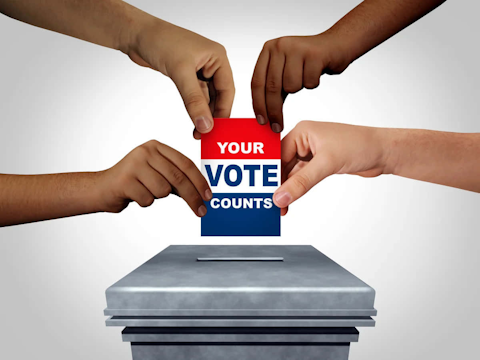
What would happen to a society if people no longer had the power to vote their governments in and out? Not as a temporary emergency, not as a crisis measure, but as a structural shift in how a country is governed. In the UK and elsewhere, small signs already appear — postponed local elections, growing curbs, tighter controls — hints that the future may not look like the democratic rhythm we have taken for granted. This raises a deeper question. If the vote disappears, will the chaos disappear with it?
Seen through the lens of regulation, society begins to look less like a political system and more like a living body. In the body, regulation is the ability to return to baseline after a signal has passed. Dysregulation appears when signals no longer resolve, when activation becomes chronic. The system stays switched on.
Protests, unrest, and constant political agitation can be read as such signals. They are not just expressions of opinion. They are signs of load. Pressure that has not found a way to settle.
The vote gives that pressure a direction. It tells people that their strain can be converted into change. That leaders can be removed. That the centre can be pushed by the edges. In this sense, voting does not just choose governments. It powers the system of activation itself. It keeps the possibility of overturning the centre alive in the minds of the many.
If that power were taken away, something fundamental would change. The signal would lose its target. The sense that pressure can move the centre would dissolve. And when a signal no longer believes it will be heard, it often stops rising.
In the body, when a nerve pathway is cut, pain from that region fades. Not because the tissue is healed, but because the message can no longer travel. The system becomes quieter. Externally calmer. Internally unchanged.
So the question becomes unavoidable. Would a society without voting become more regulated, or simply more numb?
There is a real possibility that visible chaos would subside. Fewer protests. Less outrage. Less expectation that shouting can reshape the system. A quieter public space. The surface might look more orderly, just as a numbed body looks more peaceful.
But regulation is not the same as silence. In living systems, regulation means that strain is reduced at source, that load drops, that recovery becomes possible. Silence without repair is not health. It is suppression.
The suggestion points toward a future where this silence is not suppression, but transition. A move away from reactive governance toward a form created by the creators themselves — leaders who no longer arise from popularity contests, but from alignment with responsibility. Not chosen by pressure from below, but emerging from coherence within.
In bodily terms, this would be like shifting from reflex-driven control to central regulation. The system no longer waits for pain to act. It acts because it already senses what maintains balance.
In such a future, the loss of voting rights would not feel like disempowerment, but like redundancy. The mechanism would fall away because it is no longer needed. Just as inflammation subsides when the tissue finally heals.
Yet the same biology also carries a warning. When signals are blocked without the load being reduced, dysregulation does not vanish. It migrates. It turns into rigidity, brittleness, sudden breakdown instead of continuous adjustment. The system looks stable until it isn’t.
Everything depends, then, on the quality of the centre.
If the centre is coherent, grounded, and structurally exposed to reality, silence may indeed reflect regulation. If the centre is insulated, self-referential, and sealed from consequence, silence becomes the mask of accumulating strain.
This is why the future is not really about removing a right. It is about replacing a mechanism. Trading external pressure for internal responsibility. Trading reactive correction for anticipatory care. Trading the power of the many to overturn for the capacity of the few to hold.
Whether society could accept such a shift depends on one thing alone. Trust. Not trust as belief, but trust earned through a visible reduction of strain in everyday life. When people feel less pressed, less threatened, less burdened, the urge to push the centre weakens on its own.
If that does not happen, the vote may disappear, but the dysregulation will remain, waiting for another path to express itself.
Postscript — What If
What if democracy today is functioning like chronic inflammation — a constant activation driven by unresolved societal load? And what if removing the vote would quiet the signal without curing the condition?
Or, more radically, what if a truly internally regulated form of governance could lower the load itself, allowing society to return to baseline, so that the need to constantly challenge the centre simply fades?
In living systems, coherence is never proven by quiet alone. It is proven by whether the whole can finally rest.