How a light‑sensitive painting process reveals the brain–mind, introspection, and the making of the world
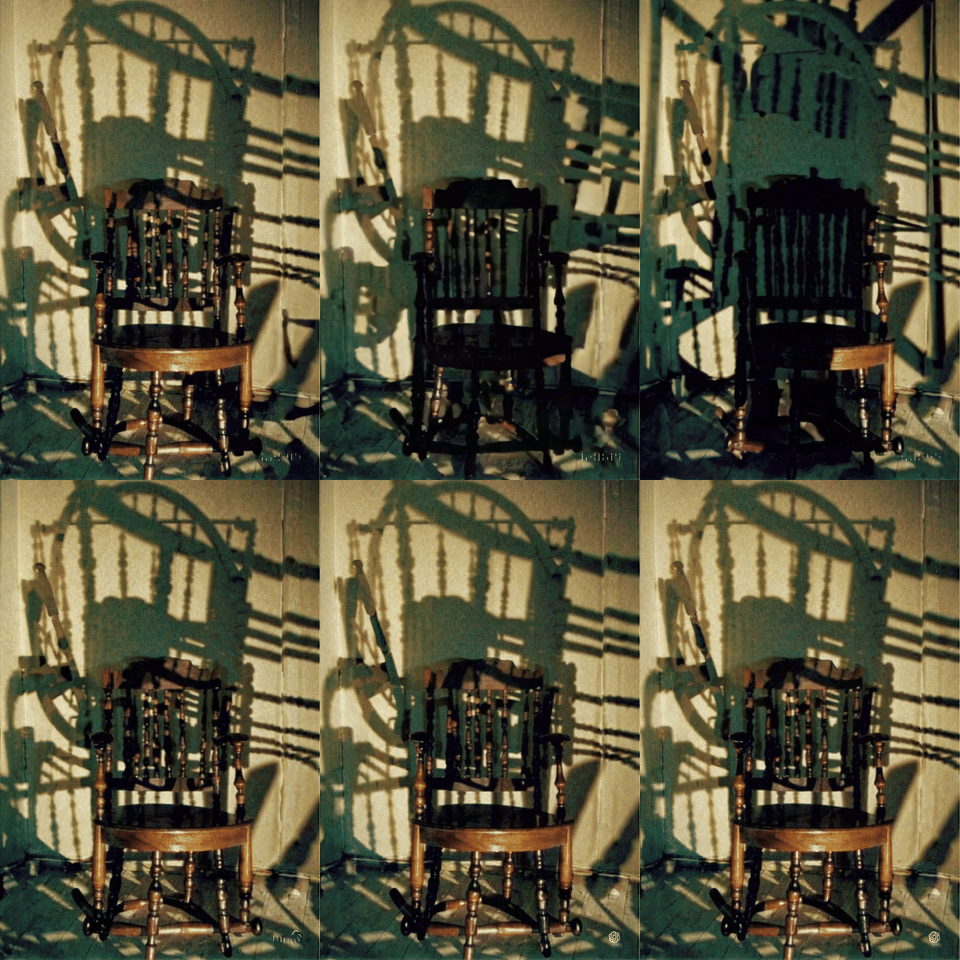
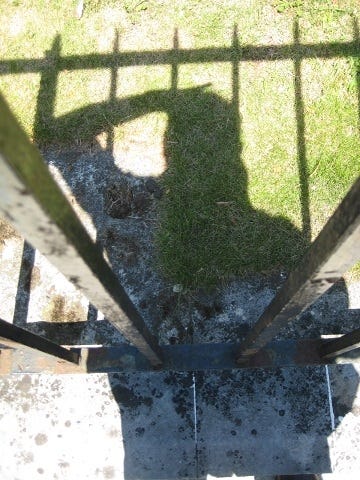
It began as an experiment with photo emulsion, a fragile material meant to catch light and hold an image, yet always on the edge of disappearing. Shadows were cast across a canvas, and for a moment, the room revealed itself as traces of absence, as outlines made by what blocked the light. Nothing was drawn. Nothing was designed. The world simply touched the surface and left a mark.
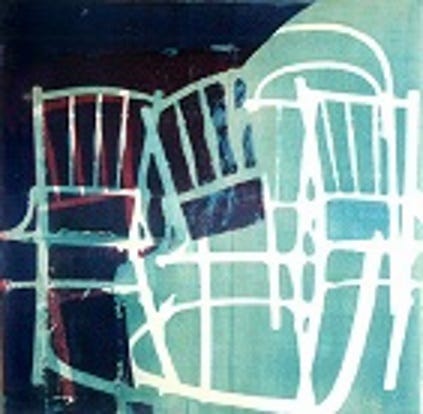
What appeared at first looked like furniture, railings, windows, fragments of a lived space. But even then, it was clear that this was not representation. It was contact. Light meeting matter. Reality inscribing itself before any story could be told about it.
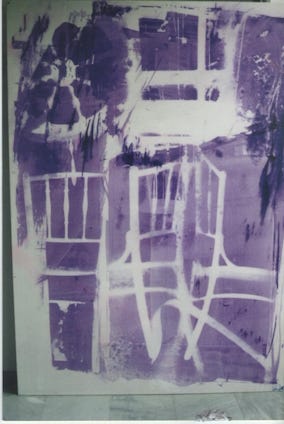
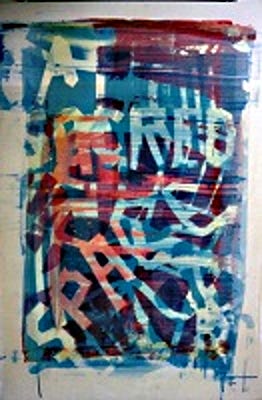
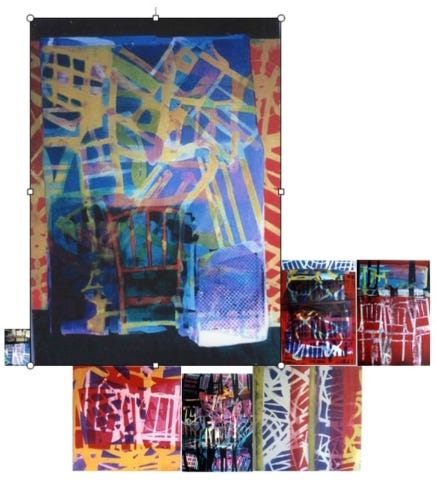
Then the layering began. More shadows. More pigment. Each new exposure did not preserve what came before, but reorganised it. Forms softened. Edges crossed. Colour entered where identity once was. What had been a chair or a frame slowly lost its name, yet something stronger emerged in its place: rhythm, scaffolding, a quiet architecture of lines and crossings that no longer belonged to any object.
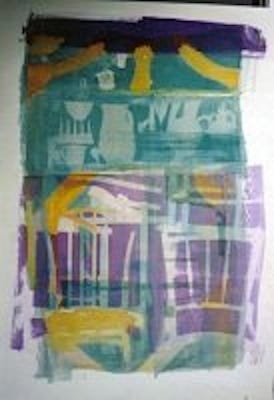
With enough layers, the room disappeared. What remained was abstraction, but not emptiness. It was filled with structure, as if the painting had forgotten the things that made it, but remembered the way they had been held together.
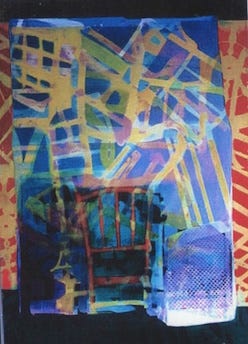
Only later did it become clear that this process was not just making images. It was showing how perception itself is assembled in the brain–mind.
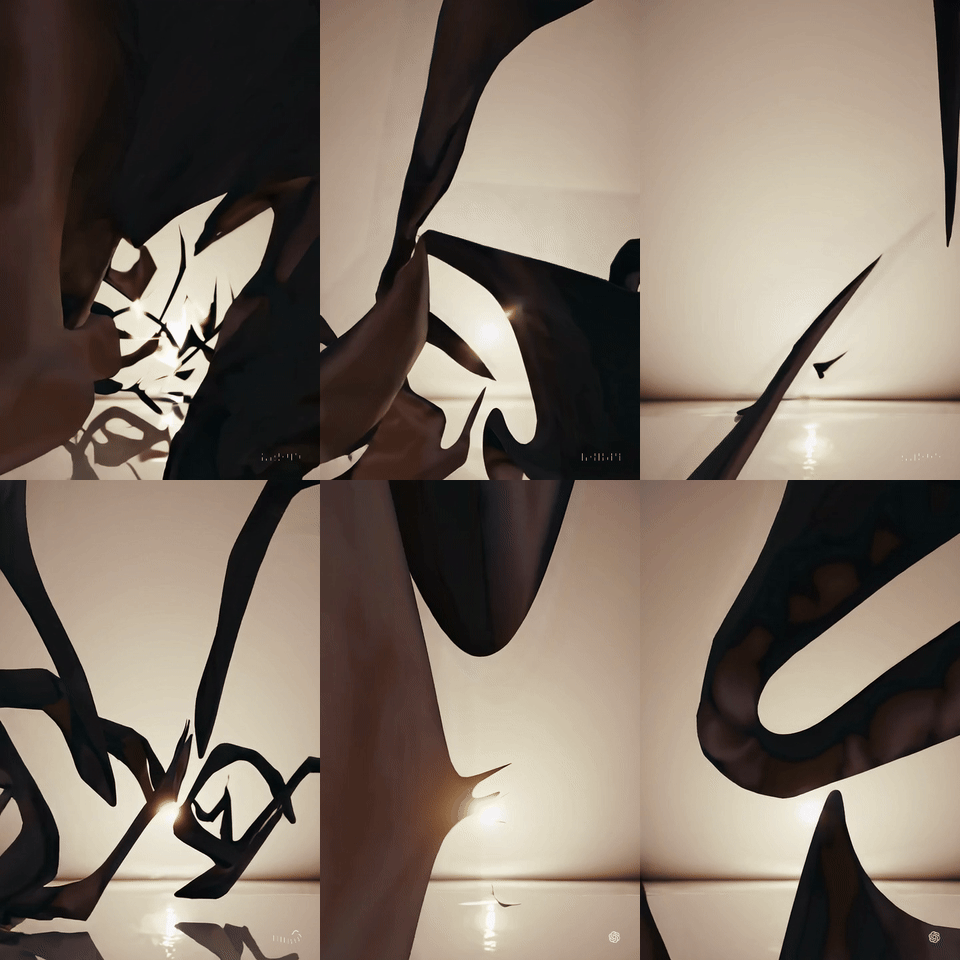
Experience begins the same way. There is first contact, raw sensation, the world touching us before we know what it is. Then the mind layers pattern, memory, colour, feeling, narrative. Identity forms. Meaning stabilises. And yet, if the process continues without interruption, the original forms are never truly fixed. They are absorbed, reorganised, and slowly lose their solidity. What remains is not the object, but the grammar that once made the object appear.
In the paintings, light performs this directly. It bypasses intention. It shows how form arises from contact, and how, through repetition and layering, identity gives way to structure. The spontaneity of the process is not an artistic choice. It is essential. It mirrors how the brain–mind actually works: not by design, but by continuous response to what touches it.
Seen this way, the canvas becomes a surface where perception is built in real time.
And once this is seen in the studio, it begins to appear everywhere.
The same layered scaffolding that remains in the abstract paintings is the same logic that shapes the cityscape. Paths become streets. Frames become buildings. Repeated functions become districts. What begins as human need and movement, layer by layer, loses its original identity and becomes grids, networks, skylines. The city is not just built by minds. It is the mind’s own process scaled up into stone, steel, and light.
What happens in milliseconds in the brain–mind unfolds over decades in civilisation. The scale changes. The structure does not.
And the same recognition sits at the heart of introspection and spirituality.
The inner search also begins with experience: moments of insight, silence, wonder, fear. Then come layers of meaning, belief, teaching, story. Forms are built to hold what was felt. But if the looking is sustained, those forms too begin to dissolve. What remains is not a final answer, but the recognition of how experience itself comes into being. Not what is perceived, but how perceiving happens at all.
Here, the search for Truth turns quietly into the discovery of process.
The Truth is not a hidden object within us. It is the living structure by which inside and outside arise together.
In this sense, the shadow paintings are not about rooms or objects. They are about becoming. They record how reality touches a surface, how form assembles, how identity fades, and how a deeper coherence remains. They show, without words, the same movement that builds a moment of awareness, a sense of self, a city, and a civilisation.
What began as an attempt to catch shadows became a way of seeing the grammar of the world. From light to trace, from trace to abstraction, from abstraction to structure, the process reveals itself again and again, at every scale. And in that seeing, wholeness appears — not as an idea, but as the recognition of a single generative movement in which mind, art, and world are held as one.